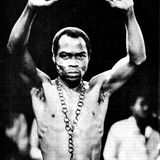
Fela and Africa 70 use a pattern of commands and responses to satirise military obedience. Hear how the arrangement rehearses the behaviour being criticised. The violence that later engulfed Kalakuta has a separate historical record.
A repeated question and a communal response make the song adaptable to collective mourning and resistance. It circulated through performances by many people. An individual recording can document a version without establishing a sole writer or origin.

Masekela turned the demand for Nelson Mandela’s release into a song a crowd could take up. Listen to how the horn and the repeated invitation carry the same message across different audiences.

Dube’s reggae recording makes a call for unity through a repeated chorus and a rhythm that keeps the address open to listeners. It is useful evidence of how South African reggae engaged an apartheid-era audience.

The opening diagnosis sets the political subject before the listener has to know every reference. The reggae setting moves the complaint through repeated lines, making the song both a recorded address and an invitation for an audience to join it.
The title phrase turns an argument about rulers and international respectability into a refrain. The band leaves room for the address to develop at length. Follow the build before treating the piece as a single slogan.

The Oromo-language song offers a route into Hachalu’s public importance through questions of place, history and belonging. Its reception among Oromo listeners belongs in the account alongside readings of its specific words and imagery.

The 2017 recording addresses political rights in Uganda. Music In Africa reported a ban on broadcast, giving the listener a documented event to distinguish from a general account of the artist’s political battles.

The Zimbabwean collaboration gives voice to economic hardship and frustration through two performing perspectives. Its reception can be discussed through reported controversy around Winky D’s 2023 project, with the song’s actual credits and subject kept in view.
Fela addresses skin bleaching directly, with Africa 70 sustaining the pattern that carries the argument. It earns a place beside songs about governments because popular music also disputes who sets the terms of public appearance.

Makeba’s recording carries a direct warning addressed to apartheid’s leadership. Study it as both a version by a recognisable performer and part of a struggle-song tradition that circulated among many singers and audiences.
The Nigerian rapper makes disorder itself the repeated subject of the track. Associated Press reported that it was barred from broadcast in 2004, giving this entry a specific public response alongside the recording.