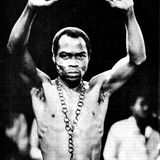
Long-form grooves let the band develop its argument through recurring exchanges. Hear the relationship between a repeated instrumental pattern and the point at which the voices give the pattern a political meaning.
This compilation gives the listener several South African ensembles to compare. Move between tracks to hear shared guitar and vocal textures alongside differences in the particular groups.

Évora’s voice is the strongest point of continuity across the album. The changing tempos and instrumental settings make it possible to hear the range of her approach to Cape Verdean song rather than relying solely on the best-known ballads.
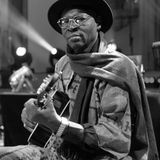
Touré and Cooder’s guitars give the listener several ways into the rhythmic exchange. Follow which player introduces a figure and how the other works around it before reaching for a broad explanation of musical kinship.

Keita’s vocal force gives the album continuity while the arrangements move between acoustic and electronically produced textures. The changing surfaces are part of the project’s interest rather than a reason to treat it as several separate styles.
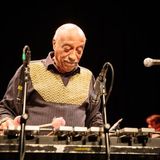
This retrospective brings together pieces from 1969 to 1974. It rewards listening for recurring ensemble textures and closely spaced instrumental parts, with the compilation format giving the listener a wider sample than one original session.
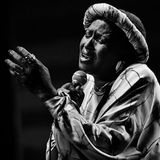
Different languages, tempos and vocal approaches make the recorded voice the strongest common thread. The sequencing offers a way to hear how Makeba shifts the energy of a performance from one arrangement to the next.

“Yéké Yéké” is a clear entry point into the album, whose arrangements bring electronic production and West African performance into the same rhythmic space. Use the other tracks to hear what the familiar single gives only in miniature.

Mtukudzi’s phrasing is easier to appreciate across the sequence than through a single crossover song. The relationship between his lead voice and the accompanying rhythmic patterns gives listeners a useful point of continuity.
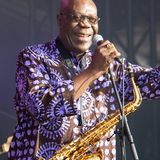
The title track is the best-known opening into Dibango’s blend of saxophone, tight ensemble rhythm and repeating vocals. The longer release gives the listener grounds to consider the band’s sound beyond the familiar refrain.

The sequence gives melodic vocals and understated rhythmic detail room to accumulate. Guest turns such as Tems’s on “Essence” change the texture without breaking the easy movement between the songs.

The album holds several rhythmic and production approaches together through the singer’s phrasing. Following the credited guests and transitions is a useful way to understand how the range of the record was constructed.

Sangaré’s strong lead voice remains the centre through changes in the production around it. The album rewards attention to the moments where the arrangement makes space for a line and then re-enters with more weight.

The album offers a sustained introduction to Aweke’s vocal projection and phrasing. The band’s repeating figures give her room to extend a line or accelerate through it without losing the movement of the song.
Ladysmith Black Mambazo and other South African contributors are central to the sound of this American-led collaboration. The record’s musical credits and the debate about recording during the cultural boycott are both worth following.