How club output, African titles, World Cups and individual honours change the case
Ask a supporter to choose Africa’s greatest men’s footballer and the first choice is often hidden in the question. A fan thinking of the 1995 Ballon d’Or has already chosen a different test from someone remembering Didier Drogba heading Chelsea level in Munich or Roger Milla scoring twice in extra time against Colombia. Each memory is evidence. Each answers a different question.
The eight cases here start with four ways of judging a career: the player’s individual peak, the work he sustained across club seasons, what his national side could do with him and how much he could change a match when the stakes rose. None has to be weighted equally to make a coherent case. Whatever the weighting, the evidence should keep the dates, competitions and role visible. Two goals in a final can tell you something about finishing under pressure. They cannot cover what the same player did over an entire season.
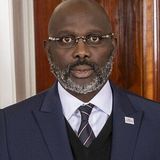
Weah won the 1995 Ballon d’Or and FIFA World Player of the Year after a season in which he led Champions League scoring with Paris Saint-Germain. At Milan he produced his memorable run from deep to score against Verona. Liberia did not reach the World Cup with him, but came within one point of qualifying for the 2002 edition. His case is strongest when individual peak matters and international opportunity is judged in context.

Eto’o scored in Barcelona’s 2006 and 2009 Champions League final wins. He won consecutive club trebles with Barcelona and Inter, and two AFCONs with Cameroon. CAF records 18 AFCON goals across six editions. That range gives him the strongest all-round case in this selection if club and national-team achievement carry comparable weight. The voter can also verify the contribution at match level, especially in the two European finals he scored in.
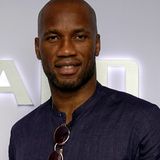
Drogba headed Chelsea level late against Bayern in the 2012 Champions League final in Munich and converted the kick that ended the shootout. His Premier League record supplies another scale, with four titles at Chelsea and 29 league goals in 2009/10. The match merits a close look, while the season explains why Chelsea could build its attack around him before it got anywhere near a European final.
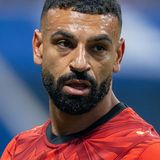
Salah won Premier League Golden Boots in four seasons through 2024/25, when his 29 goals helped Liverpool win the league again. He opened the scoring from the spot when Liverpool won the 2019 Champions League final. Egypt reached two AFCON finals during his international career. His argument is strongest on sustained elite scoring and gives a reader several seasons to weigh against the impact of one individual tournament.
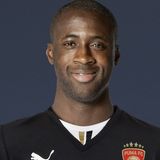
Barcelona started Touré alongside Gerard Piqué in the 2009 Champions League final. Manchester City used him as a midfield scorer, with 20 league goals during its 2013/14 title season. He also captained Côte d’Ivoire to the 2015 AFCON trophy. Those three roles expose the limits of assigning one position to an entire career or counting his goals as if he had a striker’s starting position throughout.

Abedi’s corner made Basile Boli’s winning header possible when Marseille beat Milan in the 1993 European final. He was named best player at the 1992 Africa Cup of Nations, when Ghana reached the final. France Football gave him its African player award in three consecutive years through 1993. His strongest case is for valuing the decisions a creator makes before a goal rather than only the player whose name appears against it.

Porto trailed Bayern Munich before Madjer’s backheel brought it level in the 1987 European Cup final. He then supplied the cross for Juary’s winner. Both contributions belong in the account. The first shows creativity in an apparently closed shooting position and the second shows him delivering to another runner. Madjer also played for the Algeria side that won the country’s first Africa Cup of Nations in 1990.
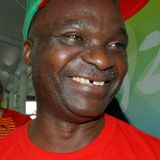
Milla scored four times at Italia ’90, twice in extra time against Colombia. Cameroon became the first African side to reach a men’s World Cup quarter-final and lost to England after extra time. Milla returned at 42 and scored against Russia in 1994. A vote for him can rest on a player’s power to change the reach and profile of his national team at the World Cup.
George Weah’s 1995 Ballon d’Or and FIFA award give him a remarkable individual peak. The point is stronger alongside his club football: he led the Champions League in scoring for Paris Saint-Germain in 1994/95 before moving to Milan. Mohamed Salah offers an unusually clear test of repetition in the Premier League. His fourth Golden Boot came in 2024/25, when his 29 goals helped Liverpool win the title. Taken together, these cases let the reader decide whether the greatest distinction is reaching the highest individual peak or remaining near the top through several cycles of opponents and teammates.
Yaya Touré adds an important positional test. He started in central defence in Barcelona’s 2009 European final and scored 20 league goals from midfield in Manchester City’s 2013/14 title campaign. A list arranged chiefly by striker statistics would have difficulty accounting for what either team trusted him to do.
Samuel Eto’o’s Cameroon career puts two AFCON wins beside 18 goals at the tournament. His back-to-back club trebles with Barcelona and Inter also give him the broadest case in this selection if club achievement and continental achievement carry roughly equal weight. Milla’s strongest case lies somewhere else. Cameroon’s run to the 1990 World Cup quarter-finals gives us several games in which to see how he changed the attack of a side playing on an unfamiliar stage.
The national opportunities were different. Weah played for Liberia and came within a point of the 2002 World Cup in qualifying. Salah has reached AFCON finals with Egypt. A player can have a substantial international record without a winner’s medal, just as a single exceptional tournament can be worth examining even when it does not represent the player’s entire career.
Drogba both equalised and converted the deciding penalty for Chelsea in 2012. Abedi Pele supplied the corner from which Basile Boli scored Marseille’s 1993 winner. Rabah Madjer equalised with a backheel in 1987 and set up Juary to win the final for Porto. Together these are a useful argument about what to credit. A goal can carry the greatest visible weight, while the pass or delivery that makes the chance possible can be equally revealing of a player's role. Choose the criterion before making the vote. You can prefer a comprehensive case for Eto’o and still recognise why changing the weight given to individual peak, sustained output or World Cup impact can change the answer.
AFCON 2027: East Africa’s Tournament and the Work Beyond It
The announced dates, three co-hosts and the football infrastructure worth following
African Kingdoms and Empires Before Colonial Rule
A guide to historical states through manuscripts, urban sites, trade and court art
Why African Startups Fail: Questions a Failure Story Should Answer
Customer demand, operating economics, financing and what the records establish