

Weah combined explosive acceleration, strength and extraordinary dribbling with clinical finishing at Monaco, Paris Saint-Germain and AC Milan. His 1995 Ballon d'Or and FIFA World Player of the Year awards broke a global barrier for African footballers. Liberia never reached a World Cup during his playing career.
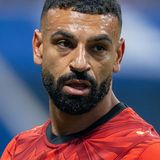
Salah transformed Liverpool's attack with his pace, movement and prolific left-footed finishing. He helped the club win the 2019 Champions League and Premier League titles in 2020 and 2025, collecting several Golden Boots along the way. His goals for Egypt helped end the country's long World Cup absence in 2018.
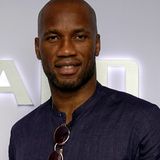
A commanding striker with a gift for decisive goals, Drogba became a Chelsea icon by leading the line through a period of unprecedented success. His late equaliser and winning shoot-out penalty in the 2012 Champions League final remain legendary. He also helped Côte d’Ivoire qualify for its first World Cup in 2006.

Abedi Ayew's close control, imagination and ability to glide past defenders earned him three consecutive France Football African Player of the Year honours from 1991 to 1993. He helped Marseille lift the 1993 Champions League trophy and was part of Ghana's 1982 AFCON-winning squad, becoming a model for generations of African playmakers.
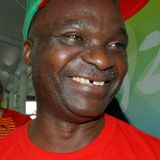
Milla's four goals at the 1990 World Cup, at the age of 38, helped Cameroon reach a historic quarter-final and introduced his corner-flag dance to a worldwide audience. Twice African Footballer of the Year, he also won AFCON titles in 1984 and 1988. His influence on Africa's World Cup identity remains enduring.
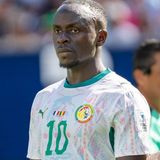
Mané's tireless pressing, explosive running and finishing powered Liverpool to European and English league titles. Twice named Africa's player of the year, he converted the decisive penalty when Senegal won its first AFCON title in February 2022. His international career gave Senegal a focal point during its rise as a continental power.
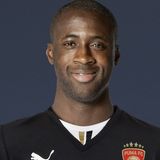
Touré could dominate midfield through physical strength, passing range and surging runs into the penalty area. He won the Champions League with Barcelona and became a driving force in Manchester City's emergence as an English powerhouse. Four consecutive CAF player awards and captaining Côte d’Ivoire to the 2015 AFCON title underline his achievements.
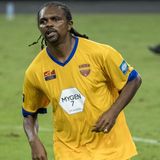
Kanu's unusual combination of height, delicate ball control and creative passing distinguished him at Ajax, Inter and Arsenal. He won the 1995 Champions League with Ajax, inspired Nigeria's 1996 Olympic triumph and belonged to Arsenal's unbeaten league squad. His two CAF Player of the Year awards reflect a career of considerable range.

Augustine Okocha turned dribbling into an art form, entertaining supporters in Nigeria, Germany, Turkey, France and England. His improvisation and balance were matched by a capacity to create chances from difficult positions. An AFCON winner in 1994 and Olympic champion in 1996, he later became a beloved captain at Bolton Wanderers.
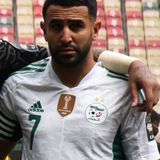
Mahrez's superb first touch and left-footed creativity made him central to Leicester City's extraordinary 2016 Premier League triumph. He won further league titles and the Champions League with Manchester City, and captained Algeria to AFCON glory in 2019. His 2016 African Player of the Year award recognised a landmark season.
Mekhloufi was a celebrated Saint-Étienne player who left French professional football in 1958 to join the FLN football team, representing Algeria's independence cause. He returned to club football after independence and won further French league titles. His career combined exceptional sporting achievements with a distinctive place in Algerian history.
Known as the Black Panther, Keïta became the first African Footballer of the Year in 1970. His elegant movement and prolific finishing made him a star of Saint-Étienne's championship-winning sides in France. He also helped Mali reach the 1972 AFCON final, leaving a legacy that preceded the modern wave of African exports.

Madjer's audacious backheel in the 1987 European Cup final helped Porto defeat Bayern Munich, and he supplied the cross for the winning goal. The 1987 African Footballer of the Year also represented Algeria in two World Cups and helped his country secure its first AFCON title in 1990.
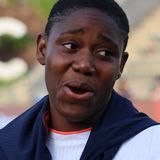
Oshoala's speed, strength and movement made her a prolific striker for Nigeria and Barcelona. Her six African Women's Player of the Year awards set a continental benchmark, while her European trophies demonstrated what African women could achieve at the highest club level. She also starred in Nigeria's successful continental campaigns.
Yekini was Nigeria's leading striker during its breakthrough in the 1990s. He won the 1993 CAF player award, finished as top scorer at the 1994 AFCON and scored Nigeria's first men's World Cup goal that year. His emotional celebration against Bulgaria captured the significance of that moment for Nigerian football.
Bwalya announced his talent internationally with a hat-trick against Italy at the 1988 Olympics, the year he was named African Footballer of the Year. He played in Belgium, the Netherlands and Mexico, and helped a rebuilt Zambia reach the 1994 AFCON final after the devastating 1993 national-team air disaster.

Aboutrika's intelligence, composure and decisive finishing made him an Al Ahly favourite without needing a European club career. He won five CAF Champions League titles and helped Egypt lift AFCON in 2006 and 2008, scoring the winner in the latter final. Injury kept him out of the 2010 tournament.
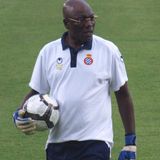
N'Kono won African Footballer of the Year in 1979 and 1982, an exceptional distinction for a goalkeeper. His athletic saves and commanding presence for Canon Yaoundé, Espanyol and Cameroon helped establish African goalkeepers on the international stage. His performances at the 1990 World Cup influenced a young Gianluigi Buffon.

A graceful playmaker with exceptional awareness, Belloumi received the African Footballer of the Year award in 1981. His winning goal against West Germany at the 1982 World Cup became a defining moment for Algerian sport. Much of his club career was spent at home, where his creativity made him a national icon.
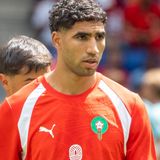
Hakimi combines the pace of a winger with the responsibility of a modern full-back. His career has included major clubs in Spain, Germany, Italy and France. A key member of Morocco's historic 2022 World Cup semi-final team, he won the 2025 Champions League with PSG and was named CAF Men's Player of the Year that November.
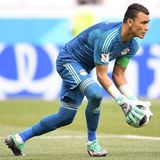
El Hadary's reflexes, leadership and longevity helped Egypt win four Africa Cup of Nations titles. He was a major figure in Al Ahly's continental successes and represented Egypt at the 2018 World Cup aged 45, becoming the oldest player to appear in the men's tournament as of that edition.

Essien's power, tackling and versatility established him as an elite midfielder at Lyon and Chelsea. He helped Chelsea win two Premier League titles and played an important role in Ghana's first World Cup campaign in 2006. Injuries interrupted his peak, but his ability to control physically demanding matches remains memorable.
Pokou was a prolific scorer long before African stars became regular fixtures in Europe's biggest leagues. He finished as AFCON's leading scorer in 1968 and 1970 and struck five times in one match against Ethiopia in 1970. His career at ASEC Mimosas and Rennes established his reputation on both continents.

Hassan's relentless movement and appetite for goals made him a central figure in Egyptian football over two decades. He won AFCON in 1986, 1998 and 2006 and scored the goal that secured Egypt's qualification for the 1990 World Cup. His long club career included successful spells with Al Ahly and Zamalek.
Nkwocha's finishing dominated women's continental football for years, bringing her four African Women's Player of the Year awards. She scored four times in the 2004 African Women's Championship final and remained a leading figure in Nigeria's many title-winning campaigns. Her consistency made her a standard-setter for African women strikers.
Osimhen's aerial ability, relentless running and instinctive finishing helped Napoli end a 33-year wait for the Italian league title in 2023. That season brought him the Serie A scoring crown and CAF Men's Player of the Year award. He subsequently helped Nigeria reach the final of the 2023-edition AFCON.
Chitalu's exceptional goalscoring made him a legend of the Zambian league, particularly at Kabwe Warriors. He represented Zambia at the 1974 AFCON, when the team reached the final, and at the 1980 Olympics. His celebrated domestic scoring feats are an important part of African football history, although some totals remain disputed.
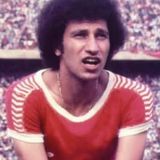
Nicknamed Bibo, El Khatib was a skilful and imaginative forward who became one of Al Ahly's defining players. He won the 1983 African Footballer of the Year award, helped his club establish itself among Africa's leading teams and was part of Egypt's 1986 AFCON-winning squad.
Mulamba produced one of AFCON's most remarkable individual performances in 1974, scoring nine goals as Zaire won the tournament. He struck twice in the final replay against Zambia and later represented his country at the World Cup. His goals remain a defining achievement in Congolese football history.
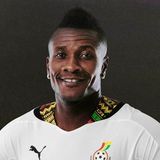
Gyan's strength, movement and assured finishing carried Ghana through three World Cups. His six goals across the 2006, 2010 and 2014 tournaments were a landmark for African men's football. He also enjoyed prolific club spells in Asia and helped the Black Stars reach two AFCON finals.
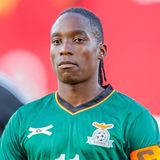
Banda became an Olympic sensation with successive hat-tricks at Tokyo 2020, played in 2021. Her pace and finishing carried into the United States, where she helped Orlando Pride win the 2024 NWSL championship and earned the championship final’s MVP award. CAF named her African Women's Player of the Year for 2024.

Hassan's long international career took him through four Egyptian AFCON triumphs. Named the tournament's outstanding player in 2006 and 2010, he contributed goals as well as leadership and work rate. His club career spanned Egypt, Turkey and Belgium, reflecting unusual longevity at a demanding level.

Aubameyang's blistering pace and composed finishing earned scoring crowns in Germany and England. He became the 2015 African Player of the Year while at Borussia Dortmund and later captained Arsenal to the 2020 FA Cup. For Gabon, he provided a world-class attacking presence despite limited opportunities at major tournaments.
Faras spent his celebrated club career with Chabab Mohammédia and became Morocco's first African Footballer of the Year in 1975. A year later he captained the Atlas Lions to their first AFCON title. His movement and finishing made him an enduring symbol of Moroccan football before its modern international breakthroughs.
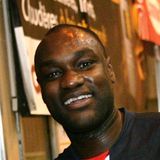
Mboma's powerful left foot and athletic finishing made him a formidable opponent in Africa, Europe and Japan. In 2000 he won Olympic gold, the AFCON title and African Player of the Year honours. He returned to help Cameroon retain its continental championship in 2002, forming part of a particularly successful generation.
McCarthy announced himself with a prolific display at the 1998 AFCON, helping South Africa reach the final. He went on to win the Champions League with Porto under José Mourinho and enjoyed successful spells in Spain and England. His international scoring record stands among Bafana Bafana's most important individual achievements.
Gomaa's physical strength, aerial ability and tactical discipline anchored Egypt's defence during its three consecutive AFCON triumphs from 2006 to 2010. He was equally important to Al Ahly's repeated continental club successes, winning six CAF Champions League titles. His career exemplifies the quality of defenders developed in African leagues.
Zaki's agility and calm authority helped Morocco become the first African team to advance from a men's World Cup group in 1986. That year he won African Footballer of the Year before building a respected career with Mallorca in Spain. He remains a landmark figure in Moroccan goalkeeping.
Dhiab's passing and vision made him Tunisia's most celebrated playmaker of his generation. He won African Footballer of the Year in 1977 and helped Tunisia reach the 1978 World Cup, where the team recorded Africa's first men's World Cup victory. His long association with Espérance cemented his domestic standing.
Yeboah combined strength and ferocious shooting with an instinct for spectacular goals. Twice the Bundesliga's leading scorer with Eintracht Frankfurt, he later became a Leeds United favourite through memorable long-range strikes. His career showed that African forwards could lead the scoring charts in Europe's strongest leagues.
Touré's speed, anticipation and commitment helped Arsenal complete its unbeaten Premier League season in 2003–04. He later won another English league title with Manchester City and was part of Côte d’Ivoire's 2015 AFCON-winning squad. His defensive versatility supported a long career at elite club and international level.
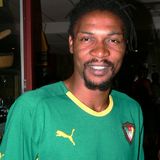
Song represented Cameroon at four World Cups and captained the team through much of its successful era. He won AFCON in 2000 and 2002 and played in several European leagues. His intensity, tackling and leadership made him one of the most recognisable African defenders of his generation.
Akide helped establish Nigeria as a force in women's international football and was part of its historic run to the 1999 World Cup quarter-finals. She became the inaugural African Women's Player of the Year in 2001 and played professionally in the United States, opening doors for later generations of African women.
Dahleb's technical quality and creative passing made him a leading figure at Paris Saint-Germain during the club's formative decades. He helped PSG win consecutive French Cups in 1982 and 1983 and represented Algeria at the 1982 World Cup. His career remains an important part of Algerian football's European history.

Grobbelaar's agility, unconventional style and confidence made him a fixture in Liverpool's great teams of the 1980s. He won six English league championships and played a memorable role in the 1984 European Cup final shoot-out. Internationally, he represented Zimbabwe, where he remains a prominent football figure.
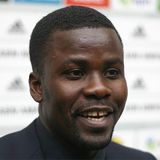
Kuffour's fierce competitiveness and athletic defending made him a mainstay of Bayern Munich's back line. He won the 2001 Champions League and scored the winning goal in that year's Intercontinental Cup. His years in Germany and appearances for Ghana established him among the continent's notable defensive exports.
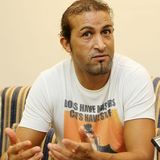
Hadji's dribbling and attacking flair attracted international attention during Morocco's 1998 World Cup campaign, when he scored a memorable goal against Norway. He received the African Player of the Year award that year and later entertained supporters at Coventry City and other European clubs.
Bell combined confident positioning with excellent reflexes during a long career in Cameroon, Côte d’Ivoire, Egypt and France. He won continental titles with Cameroon and competed with Thomas N'Kono in an exceptional generation of African goalkeepers. His years at Marseille and Bordeaux broadened his reputation beyond Africa.
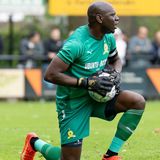
Onyango helped Mamelodi Sundowns win the 2016 CAF Champions League and was recognised as African Player of the Year based in Africa for that season. His commanding presence also helped Uganda return to AFCON after a 39-year absence. He became a reference point for East African goalkeepers and club professionals.
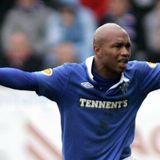
Diouf's direct running and fearlessness were central to Senegal's breakthrough in 2002, when the country reached the AFCON final and a World Cup quarter-final. The African Player of the Year in both 2001 and 2002, he later played extensively in Britain, notably for Bolton Wanderers and Liverpool.
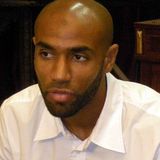
Kanouté's elegant hold-up play and composed finishing made him a key figure in Sevilla's back-to-back UEFA Cup victories in 2006 and 2007. He received the 2007 African Player of the Year award and also represented Mali at continental tournaments. His ability to link midfield and attack distinguished his club career.
Known as Mathematical for his precision on the right wing, Odegbami combined pace with clever movement and accurate finishing. He helped Nigeria secure its first AFCON title in 1980, scoring twice in the final against Algeria. His long association with Shooting Stars made him a domestic football icon as well.
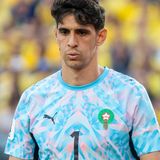
Bounou's calm under pressure was instrumental in Morocco's run to the 2022 World Cup semi-finals, including a decisive penalty shoot-out performance against Spain. At Sevilla, he helped win two Europa League titles and excelled in the 2023 final shoot-out. His composure has made him a leading modern African goalkeeper.
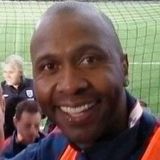
Radebe's disciplined defending and leadership earned him the captaincy of Leeds United, where he became a supporter favourite. He also represented South Africa during the country's return to international football and captained Bafana Bafana at World Cups. His career connects domestic South African football with a memorable era in England.
Modise became the first African footballer to reach 100 senior international goals, a remarkable achievement for Banyana Banyana. Her scoring instinct and technical ability sustained a long national-team career, including the 2012 Olympics. She remains a pioneer from an era when women's football received relatively little professional support.

Amunike scored both goals in Nigeria's 1994 AFCON final victory and the winner in the 1996 Olympic final against Argentina. Named African Player of the Year in 1994 by CAF, he played for Sporting CP and Barcelona. Injuries curtailed a career remembered especially for its decisive international moments.
Souleymane won African Footballer of the Year in 1972 and helped Hafia FC dominate the African club game in the 1970s. His creativity and intelligence contributed to Guinea's emergence as a continental force, including its runner-up finish at the 1976 AFCON. His legacy is rooted in African football itself.
Bwanga was named African Footballer of the Year in 1973, an unusual distinction for a defender. His commanding play for TP Mazembe and Zaire helped him stand out during a successful period for Congolese football, culminating in the 1974 AFCON title and World Cup qualification.
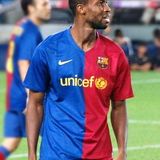
Keita's intelligence, work rate and technical reliability made him a trusted member of Barcelona's successful teams under Pep Guardiola. He won the Golden Ball at the 1999 under-20 World Cup and helped Mali secure consecutive AFCON bronze medals in 2012 and 2013. His understated effectiveness defined his club and country career.

Kgatlana's speed and daring finishing helped transform South Africa's women's attack. She won African Women's Player of the Year in 2018, scored her country's first Women's World Cup goal in 2019 and delivered the winner against Italy that sent Banyana Banyana into the 2023 World Cup knockout stage.
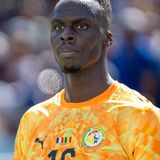
Mendy rebuilt his career in France before becoming a Champions League winner with Chelsea in 2021. His shot-stopping and calm presence also helped Senegal win its first AFCON championship in 2022. FIFA recognised his exceptional club season with its men's goalkeeper award for 2021.
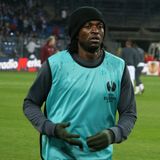
Adebayor led Togo's attack during qualification for its first World Cup in 2006 and won the 2008 African Player of the Year award. His height, mobility and finishing earned him spells at Arsenal, Manchester City, Real Madrid and Tottenham, demonstrating the quality of Togolese football on a global stage.
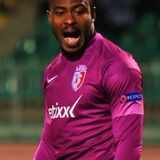
Enyeama became a distinguished goalkeeper in Africa and Europe, helping Enyimba win consecutive CAF Champions League titles and later excelling at Lille. He was central to Nigeria's 2013 AFCON triumph and represented the Super Eagles at three World Cups. His reflexes and penalty-saving ability were particular strengths.
Finidi's speed, crossing and disciplined movement made him an important part of Ajax's 1995 Champions League-winning team. He scored for Nigeria at the 1994 World Cup and helped the Super Eagles win AFCON that year. His later success at Real Betis highlighted his adaptability across leagues.
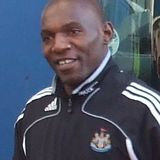
Geremi's powerful free kicks, tactical flexibility and reliable distribution made him useful to teams at the highest level. He won European titles with Real Madrid and English league titles with Chelsea, alongside Olympic gold and two AFCON championships with Cameroon. Few players of his generation covered so many roles effectively.
Ikpeba's pace and sharp movement helped Monaco win the French league in 1997, the year he received the African Player of the Year award. He was part of Nigeria's 1994 AFCON champions and 1996 Olympic gold medallists, contributing to the country's rise during the 1990s.
Dolmy's composed passing and exceptional positional sense earned him a reputation as the quiet organiser of Morocco's midfield. He helped the Atlas Lions win AFCON in 1976 and reach the knockout stage of the 1986 World Cup. His long career at Raja Casablanca established him as a domestic legend.
Abega's vision and commanding midfield play earned him the nickname Doctor. He captained Cameroon to its first AFCON title in 1984, scoring in the final against Nigeria, and was named African Footballer of the Year. His success with Canon Yaoundé also reflected the strength of African club football during that era.
Timoumi's elegant passing and control made him one of Morocco's outstanding playmakers of the 1980s. He helped FAR Rabat win the 1985 African Champions Cup and received the African Footballer of the Year award that season. He was also part of Morocco's historic 1986 World Cup side.
Manga-Onguéné was a prolific striker for Canon Yaoundé during the club's golden years in African competition. Named African Footballer of the Year in 1980, he helped demonstrate the strength of Cameroonian club football before the country's World Cup breakthroughs. His finishing made him one of the era's most celebrated domestic forwards.
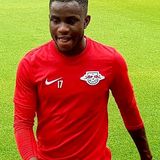
Lookman's movement and precise finishing reached a remarkable peak in the 2024 Europa League final, when his hat-trick secured Atalanta's first European trophy. He also helped Nigeria reach the AFCON final earlier that year. CAF recognised these achievements with its 2024 Men's Player of the Year award.
Chawinga's goalscoring took her from Malawi to Sweden, China and leading European clubs. She finished as Serie A's top scorer in 2022–23 with Inter and led the French league scoring charts with Paris Saint-Germain the following season. Her career has expanded opportunities and visibility for Malawian women's football.
Chawinga's explosive speed and finishing produced an extraordinary debut season with Kansas City Current in 2024, when she set an NWSL regular-season scoring record with 20 goals. She also won the league's MVP award that year, carrying the achievements of Malawian football into a major international professional league.
Lawal's tireless midfield work helped Nigeria become a continental power in the 1970s and 1980s. He scored in the final as Nigeria won its first AFCON title in 1980 and was part of Shooting Stars' 1976 African Cup Winners' Cup triumph. His service spanned five AFCON tournaments.
Oliseh brought precise passing, tactical awareness and long-range shooting to Nigeria's midfield. An AFCON champion in 1994 and Olympic gold medallist in 1996, he scored a spectacular winner against Spain at the 1998 World Cup. His club career included Ajax, Juventus and Borussia Dortmund.
Known as Chairman, Chukwu captained Nigeria to its first AFCON championship in 1980 and was recognised as the tournament's outstanding player. His leadership and defensive organisation also helped Enugu Rangers achieve continental club success. He remains a foundational figure in the development of the Super Eagles.
Sunday won the 1971 African Footballer of the Year award after establishing himself with Asante Kotoko and Ghana. His intelligence and ball skills helped Kotoko secure the African Champions Cup in 1970. His later move to Germany made him one of the early Ghanaian professionals in European football.
Known as the Golden Boy, Razak was central to Ghana's 1978 AFCON triumph and received the African Footballer of the Year award that year. His elegant passing and ability to dictate play made him a standout at Asante Kotoko and during his spell with the New York Cosmos.
Trabelsi's athleticism and attacking runs earned him a respected place at Ajax and later Manchester City. He helped Tunisia secure its first AFCON title in 2004 and represented the country at three World Cups. His combination of defensive quality and offensive support made him a distinguished North African full-back.
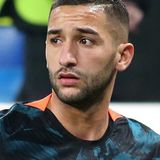
Ziyech's left foot, vision and delivery from wide areas made him a creative force at Ajax during its 2019 Champions League semi-final run. He later won the competition with Chelsea and contributed to Morocco's historic 2022 World Cup campaign. His long-range passing and shooting distinguish his attacking style.
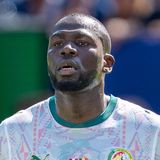
Koulibaly developed into a commanding defender at Napoli, combining physical presence with accurate distribution from the back. He captained Senegal during its first AFCON-winning campaign and represented the country at World Cups. His performances in Serie A placed him among the most respected defenders of his generation.
Kalala scored the decisive goal against Ghana in the 1968 AFCON final, delivering Congo-Kinshasa its first continental title. He was also associated with TP Mazembe's emergence as an African club power. His contribution belongs to the formative years of Congolese football's international success.
Moukila was part of the Congolese generation that won AFCON in 1972 and was named African Footballer of the Year in 1974. His technical ability helped CARA Brazzaville win the African Champions Cup that year. His achievements brought international attention to football in Congo-Brazzaville.
Ndlovu became a pioneer for African players in the early Premier League era with Coventry City, where his speed and dribbling made him a fan favourite. He captained Zimbabwe at its first AFCON in 2004 and later played for Mamelodi Sundowns. His career remains a touchstone for Zimbabwean football.
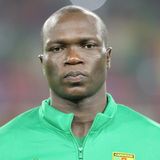
Aboubakar scored the decisive goal in Cameroon's 2017 AFCON final victory and finished as the top scorer of the 2021 edition with eight goals. His strength and finishing have also brought successful club spells in Portugal and Turkey. His World Cup performances include a memorable winner against Brazil in 2022.
Bocandé's prolific finishing made him the French top flight's leading scorer in 1985–86 while playing for Metz. He later joined Paris Saint-Germain and other French clubs, and represented Senegal at several AFCON tournaments. CAF honoured his contribution to African football with a legend award.
Omam-Biyik's towering header against defending champions Argentina in the opening match of the 1990 World Cup announced Cameroon's historic campaign. He also played at the 1994 and 1998 World Cups and won the 1988 AFCON. His club career took him across France and Mexico.
Keshi was a commanding defender and captain of Nigeria's 1994 AFCON-winning squad. His success in Belgium with Anderlecht helped establish a pathway for later Nigerian professionals in Europe. His subsequent coaching achievements were notable, but his playing career alone secured his place in Nigerian football history.
Añonma helped Equatorial Guinea win the Women's African Championship in 2008 and 2012, bringing the country unprecedented international football success. She also excelled in Germany with Turbine Potsdam and received the 2012 African Women's Player of the Year award. Her goals helped raise the profile of a smaller football nation.
Phiri was a prolific forward for Malawi and Big Bullets during the 1970s and early 1980s. He helped Malawi win consecutive regional CECAFA titles in 1978 and 1979. His domestic and regional achievements made him an enduring figure in Malawian football.
Omondi's dribbling, versatility and creativity helped Uganda reach the 1978 AFCON final, where he finished among the tournament's joint leading scorers. A central figure at Kampala City Council FC, he also played in the United Arab Emirates. His career represents a celebrated period in East African football.
Chebbak became a central figure in the emergence of Morocco's women's national team, helping it reach consecutive Women's AFCON finals and the knockout stage of the 2023 World Cup. She finished as top scorer of the 2024-edition WAFCON and won the 2025 CAF Women's Player of the Year award.
Known as Jaxa, Abbas was a celebrated Al Hilal player and part of the Sudan team that won its first AFCON championship in 1970. His reputation for technical skill and goals belongs to an important early era of Sudanese football, when domestic players could achieve continent-wide recognition.
Vassallo captained Ethiopia to the 1962 AFCON title on home soil, helping the team overcome the United Arab Republic in the final. A skilful midfielder associated with Cotton Factory, he was one of the country's defining early football figures. His legacy reflects Ethiopia's place among the founders of continental competition.
Worku scored in the 1962 AFCON final as Ethiopia overcame the United Arab Republic to claim its first continental title. A celebrated player for Saint George, he became a symbol of Ethiopian football during the early decades of African international competition. His goals connect the modern game to its continental roots.
Kofi's quick feet and inventive dribbling made him one of Ghana's most celebrated forwards of the 1960s. He played in the Black Stars' 1965 AFCON-winning team and helped Asante Kotoko become a continental force. His ability to beat defenders earned him a lasting reputation among Ghanaian football supporters.
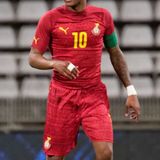
Ayew captained Ghana to victory at the 2009 under-20 World Cup before establishing himself at Marseille and in English football. His ability to arrive in scoring positions from wide or central areas helped Ghana at numerous AFCON tournaments and World Cups. He also played in two senior AFCON finals.
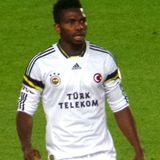
Yobo's consistency and athletic defending earned him a long Premier League career at Everton before further success in Turkey. He captained Nigeria to the 2013 AFCON title and represented the country at three World Cups. His reliability and leadership provided continuity across changing generations of the Super Eagles.

Amokachi's pace, physical strength and direct running made him a dangerous forward for Nigeria during the 1990s. He won AFCON in 1994, scored at that year's World Cup and contributed a vital equaliser in the 1996 Olympic final. His club career included Brugge, Everton and Beşiktaş.
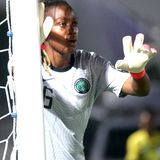
Nnadozie demonstrated her talent at the 2019 Women's World Cup as a teenager and became a standout performer at the 2023 tournament. Her penalty saves and confident handling brought further recognition in French club football. Repeated CAF goalkeeper awards established her among Africa's leading modern women's goalkeepers.
Jaïdi's aerial strength and leadership served Tunisia during its successful 2004 AFCON campaign and two World Cups. He established himself domestically at Espérance before becoming a familiar defender in English football with Bolton, Birmingham and Southampton. His international longevity made him a significant figure in Tunisian football.
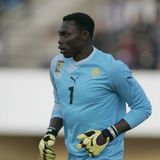
Kameni won Olympic gold with Cameroon in 2000 at only 16 years old, producing important saves in the final. He later built a lengthy career in Spain with Espanyol and Málaga. His athleticism and reflexes helped him remain a respected international goalkeeper across several generations.
Foé's strength, mobility and distribution gave Cameroon a powerful presence in midfield. He won AFCON titles in 2000 and 2002 and enjoyed club spells at Lens, West Ham, Lyon and Manchester City. His death during the 2003 Confederations Cup cut short a distinguished career at the age of 28.
Enganamouit's power and finishing helped Cameroon reach the knockout stage of the 2015 Women's World Cup, where she scored a hat-trick against Ecuador. That year she also won African Women's Player of the Year. Her professional career included spells in Sweden and other European leagues.
Uwak won consecutive African Women's Player of the Year awards in 2006 and 2007, establishing herself among the continent's leading attackers. She represented Nigeria at major international tournaments and played professionally in Europe, including in Germany and Scandinavia, during a formative period for African women abroad.
Matlou became the first South African to win the African Women's Player of the Year award in 2008 after excelling as a goalscorer. She later reinvented herself as a defender and helped South Africa win the 2022 Women's AFCON. Her versatility and longevity distinguish her international career.
Barry served Côte d’Ivoire across three World Cups and several AFCON tournaments while spending much of his club career in Belgium. His decisive penalty save and subsequent winning kick in the 2015 AFCON final shoot-out delivered a long-awaited continental title for the Elephants.
Known as Dodo Mayana, Rufai was a central member of Nigeria's 1994 AFCON-winning side and first World Cup squad. His commanding presence helped Nigeria establish itself internationally, while his club career took him through several European leagues. He also represented the Super Eagles at the 1998 World Cup.
West's energetic tackling and distinctive appearance made him instantly recognisable in the 1990s. He won the 1996 Olympic gold medal with Nigeria and the 1998 UEFA Cup with Inter Milan, having already won domestic honours with Auxerre. He represented Nigeria at the 1998 and 2002 World Cups.
Khumalo's touch, passing and creativity made him one of Kaizer Chiefs' most beloved players. He helped South Africa win the 1996 AFCON on home soil, a defining event after the country's return to international competition. His style and personality helped shape a new generation's connection with Bafana Bafana.
Sono's skill and attacking imagination made him a star at Orlando Pirates before he played alongside international greats in the North American Soccer League. His career unfolded during South Africa's sporting isolation, limiting international opportunities. His playing legacy helped inspire generations of South African footballers.
Katongo captained Zambia to its first AFCON title in 2012 and was named player of the tournament. His energetic attacking play and leadership were especially valuable during the team's emotional triumph in Gabon. He also played professionally in South Africa, Denmark, Germany, Greece and China.
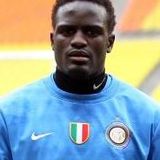
Mariga became the first Kenyan player to win the UEFA Champions League as part of Inter Milan's 2010 treble-winning squad. His career also included spells in Sweden, Italy and Spain. A powerful midfielder, he helped demonstrate that East African footballers could compete in Europe's most demanding club environments.
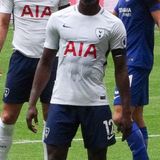
Wanyama's strength and composure helped him succeed at Celtic, Southampton and Tottenham. He scored in Celtic's famous 2012 Champions League victory over Barcelona and later belonged to Tottenham's 2019 Champions League final squad. As Kenya's captain, he became a prominent representative of East African football overseas.
Mendes became a leading player in Cabo Verde's rise from relative international obscurity to regular AFCON appearances. He played in the country's first AFCON campaign in 2013 and helped it reach the quarter-finals again in the 2023 edition. His professional career included spells in France and Türkiye.
Fabrice Maieco, known as Akwá, captained Angola during its qualification for the 2006 World Cup. His decisive goal against Rwanda secured the country's historic place at the tournament. His club career included spells in Portugal and Qatar, while his international leadership helped raise Angola's profile in African football.
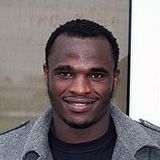
Oliech's speed and finishing made him a leading Kenyan international striker and helped his country qualify for the 2004 AFCON. He built a substantial French club career with Nantes, Auxerre and Ajaccio. His performances offered a rare sustained example of Kenyan attacking talent at a high European level.
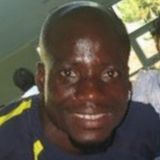
Appiah captained Ghana during its first men's World Cup appearance in 2006, helping the Black Stars reach the knockout round. His powerful running and leadership were also valued at clubs including Juventus and Fenerbahçe. He remained part of Ghana's celebrated 2010 World Cup squad.
Tshabalala's spectacular opening goal of the 2010 World Cup against Mexico became one of the defining images of Africa's first men's World Cup on home soil. His long service at Kaizer Chiefs and for Bafana Bafana, marked by his left-footed delivery and work rate, extended well beyond that moment.
Flávio's aerial finishing helped Angola reach its first World Cup in 2006, where he scored the country's only goal. At Al Ahly, he played an important role in the Egyptian club's continental successes during the 2000s. His achievements connect Angolan international football with the highest levels of African club competition.
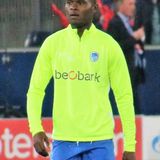
Samatta helped TP Mazembe win the 2015 CAF Champions League and earned CAF's African Player of the Year based in Africa award. He later won the Belgian league with Genk and became the first Tanzanian to play in the English Premier League. His success connected African club football with European opportunity.
Sackey won African Women's Player of the Year in 2002 and represented Ghana at the 1999 and 2003 World Cups. Her scoring ability helped establish the Black Queens as challengers in continental women's football. She belongs to the generation that built Ghana's early international reputation in the women's game.
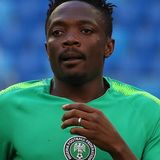
Musa scored twice against Argentina at the 2014 World Cup and twice against Iceland in 2018, establishing a notable Nigerian World Cup scoring record. His pace made him dangerous on the counterattack, while his club career included league-winning spells in Russia. He was part of Nigeria's 2013 AFCON champions.
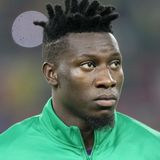
Onana's confidence with the ball and ability to play behind a high defensive line made him a notable modern goalkeeper. He helped Ajax reach the 2019 Champions League semi-finals and Inter Milan reach the 2023 final. His career illustrates the growing tactical importance of goalkeeper distribution.
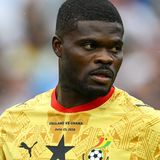
Partey's ball recovery, strength and progressive passing helped him establish himself at Atlético Madrid and Arsenal. He won the Europa League with Atlético in 2018 and became an important figure in Ghana's midfield. His international contributions include the goal against Nigeria that secured Ghana's qualification for the 2022 World Cup.

Khune's exceptional kicking and distribution distinguished him throughout a long career with Kaizer Chiefs and South Africa. He started for Bafana Bafana at the 2010 World Cup and collected numerous domestic honours. His ability to launch attacks from goal made him especially popular with South African supporters.
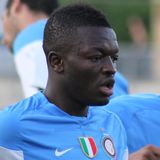
Muntari's powerful left foot and combative midfield play carried him through successful spells in Italy and England. He won the 2010 Champions League with Inter and scored Ghana's memorable long-range goal against Uruguay at that year's World Cup. He represented the Black Stars at three editions of the tournament.
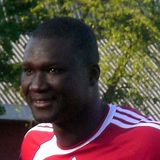
Diop scored the goal that defeated reigning champions France in the opening match of the 2002 World Cup, launching Senegal's remarkable quarter-final campaign. His height, strength and midfield presence later earned him a long career in England, including an FA Cup triumph with Portsmouth in 2008.
Bayor's creativity and leadership made her a central figure in the Black Queens' rise. Named African Women's Player of the Year in 2003, she represented Ghana at multiple World Cups and played club football abroad. Her technical quality helped shape a successful era for Ghanaian women's football.
Williams captained South Africa to a bronze medal at the 2023-edition AFCON, saving four penalties in the quarter-final shoot-out against Cape Verde. His distribution and shot-stopping also helped Mamelodi Sundowns succeed domestically and continentally. He received CAF's men's goalkeeper award in 2024.
Sow led the French league's scoring charts in 2010–11 as Lille captured a domestic league and cup double. His acrobatic finishing later made him a favourite at Fenerbahçe. Internationally, he represented Senegal during the development of a generation that would return the country to the World Cup.
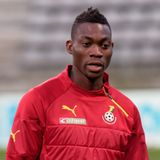
Atsu's pace and inventive dribbling helped Ghana reach the 2015 AFCON final, where he was named the tournament's outstanding player. His club career included Porto, Vitesse and Newcastle United. His death in the 2023 earthquake in Türkiye brought tributes from supporters across Africa and Europe.
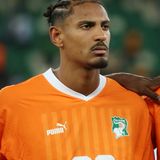
Haller's hold-up play and finishing brought success in the Netherlands, Germany and European competition. After undergoing treatment for testicular cancer, he returned to football and scored the winner in the 2023-edition AFCON final in February 2024. That moment secured Côte d’Ivoire's third continental championship.
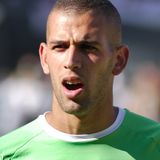
Slimani's aerial power and relentless work in the penalty area made him a prolific international striker. His equaliser against Russia sent Algeria into the 2014 World Cup knockout round, and he was part of the 2019 AFCON-winning squad. He also enjoyed productive club spells in Portugal and France.
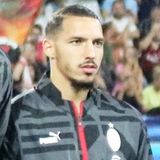
Bennacer's composed passing and press resistance helped Algeria win the 2019 AFCON, where he was named player of the tournament. He later contributed to AC Milan's 2021–22 Serie A title. His ability to receive under pressure and move the ball through midfield is central to his footballing reputation.

Boateng combined power and technique during a varied European career that included a Serie A title with AC Milan. He helped Ghana reach the 2010 World Cup quarter-finals, scoring against the United States in the round of 16. His flexibility allowed him to play several attacking and midfield roles.
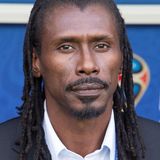
Cissé captained Senegal during its historic 2002 World Cup quarter-final campaign and AFCON runner-up finish. His disciplined midfield work gave the team balance, and he played professionally in France and England. His later success as a coach is distinct from his contribution as a player.

En-Nesyri's exceptional leap produced the winning header against Portugal that sent Morocco into the 2022 World Cup semi-finals. His aerial finishing also helped Sevilla win Europa League titles in 2020 and 2023. He combines physical presence in the penalty area with a willingness to press defenders.

Amrabat's stamina, tackling and ability to protect possession made him an influential member of Morocco's 2022 World Cup semi-final team. His performances against leading European national sides showed the value of disciplined defensive midfield play. He also helped Fiorentina reach the 2023 Conference League final.
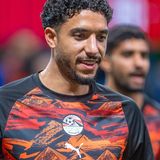
Marmoush's acceleration, intelligent movement and finishing brought him a breakout season at Eintracht Frankfurt in 2024–25. His goals earned a move to Manchester City in January 2025. He has also represented Egypt in continental competition, offering an attacking threat from both central and wide positions.
Pienaar's intelligence, first touch and combinations in tight spaces brought him success at Ajax and Everton. He represented South Africa at the 2002 and 2010 World Cups and was a particularly influential creator in the Premier League. His technique made him a prominent South African export.

Tau's movement and left-footed creativity helped Mamelodi Sundowns win the 2016 CAF Champions League. He later played in Belgium and England before enjoying further continental success with Al Ahly, including the 2023 and 2024 Champions League titles. His career bridges several of African football's strongest club environments.
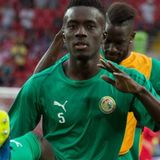
Gueye's ball-winning, stamina and positional discipline made him a reliable midfielder in France and England. He helped Senegal win its first AFCON title and contributed to Paris Saint-Germain's domestic successes. His ability to recover possession and shield more attacking teammates has been a consistent feature of his career.
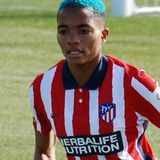
Ajibade's direct running, creativity and leadership helped Nigeria remain competitive at Women's World Cups and continental tournaments. She earned the player of the tournament award as Nigeria won the 2024-edition Women's AFCON in 2025. Her club career in Spain established her as a versatile attacking player.

Iwobi's creativity and ability to carry the ball between midfield and attack have supported a long Premier League career with Arsenal, Everton and Fulham. He scored the goal that qualified Nigeria for the 2018 World Cup and helped the Super Eagles reach the 2023-edition AFCON final.
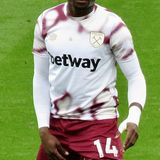
Kudus's close control, acceleration and powerful left-footed shooting made him a dynamic attacker at Ajax and West Ham. He scored twice against South Korea at the 2022 World Cup and twice against Egypt at the 2023-edition AFCON. His ability to operate in several attacking roles gives him considerable versatility.
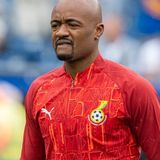
Ayew's versatility, work rate and ability to protect the ball helped sustain a lengthy career in French and English football. He represented Ghana at several World Cups and AFCON tournaments, including its run to the 2015 final. His attacking role often involved creating space and opportunities for teammates.
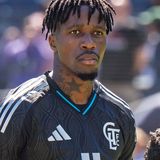
Zaha's dribbling and ability to beat defenders one-on-one made him a defining player in Crystal Palace's modern Premier League history. He represented Côte d’Ivoire after previously appearing for England in friendlies. His creativity and ability to win fouls offered a consistent attacking outlet throughout a lengthy English club career.
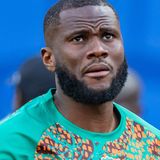
Kessié combined physical strength with reliable passing and penalty-taking during successful spells at AC Milan and Barcelona. He helped Milan win Serie A in 2022 and scored the equaliser as Côte d’Ivoire won the 2023-edition AFCON final. His work in midfield contributed to both club and country successes.
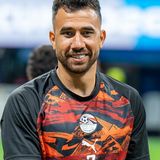
Trezeguet's direct running and finishing have contributed to Egypt's attack across several AFCON campaigns. He scored the extra-time winner against Morocco in the 2021-edition quarter-final and helped Egypt reach the final. His club career includes spells in Belgium, England and Türkiye.
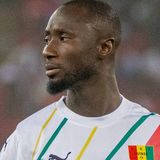
Keita's pressing, ball-carrying and ability to break defensive lines made him a standout at RB Leipzig. At Liverpool he was part of Champions League and Premier League-winning squads, though injuries limited his consistency. He also represented Guinea at successive AFCON tournaments.
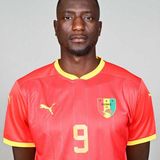
Guirassy scored 28 Bundesliga goals for Stuttgart in 2023–24, a remarkable return that helped the club qualify for the Champions League. He carried his scoring form to Borussia Dortmund and shared the 2024–25 Champions League scoring lead. His success brought renewed attention to Guinea's attacking talent.
Kundananji's pace and strength brought her goals in Spain before a landmark transfer to Bay FC in 2024. She represented Zambia at the 2023 Women's World Cup and Olympic football, helping raise the international profile of a national team that had previously received little global attention.
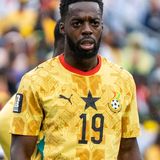
Williams became known at Athletic Club for extraordinary durability, pace and commitment to the Basque side. He helped the club win the 2024 Copa del Rey and represented Ghana at the 2022 World Cup. His national-team career began later than many of his peers, while his club achievements span many seasons.
Mokoena's defensive discipline earned him a lengthy international career and more than 100 appearances for South Africa. He captained Bafana Bafana at the 2010 World Cup and played extensively in Belgium and England, including with Blackburn Rovers and Portsmouth. His leadership helped provide continuity during a transitional era.
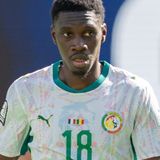
Sarr's speed and direct running made him a valuable attacking option for Senegal at World Cups and continental tournaments. He contributed to the country's first AFCON-winning campaign and scored against Ecuador at the 2022 World Cup. His club career has included spells in France and England.
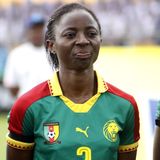
Nchout scored both goals against New Zealand at the 2019 Women's World Cup, including a dramatic late winner that sent Cameroon through to the knockout stage. Her technical finishing and attacking versatility have also brought opportunities at clubs in Norway, Spain and Italy.
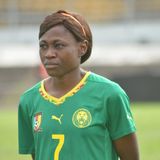
Onguéné's speed and attacking movement helped Cameroon make its mark at the 2015 and 2019 Women's World Cups. She also represented the country at the 2012 Olympics and several continental tournaments. Her long international and professional career made her an important figure in the Indomitable Lionesses' development.
No entries from this region on this list yet.
About this ranking
From the pioneers of African club football to World Cup heroes, AFCON champions and stars of the women's game, these players have left their mark on the continent and beyond. Discover their achievements, individual brilliance and contributions to their clubs and national teams, and vote for your favourites.
Begin with the football
An all-time vote works best when a reputation leads you back to a match. Didier Drogba’s equaliser and winning shoot-out penalty in the 2012 Champions League final provide one kind of evidence. Samuel Eto’o scored in Barcelona’s 2006 and 2009 final victories and won the competition again with Inter in 2010. Mohamed Salah’s club case includes Liverpool’s 2019 European title and the 2020 league championship. Ask what the player did within those teams rather than treating the trophy as an individual statistic.
Compare roles, not only goals
Thomas N’Kono and Essam El Hadary built goalkeeping cases through positioning, saves and command. Wael Gomaa, Lucas Radebe and Kolo Touré had to control space before making a tackle. Yaya Touré, Abedi Pelé and Seydou Keita influenced where possession moved next. A forward may leave a simpler scoring total, but a vote between positions should consider how well each player performed the work the position required.
The same principle applies to women’s football. Asisat Oshoala’s six CAF player awards, Barbra Banda’s Olympic scoring and Chiamaka Nnadozie’s goalkeeping should be judged as senior elite achievements in their own right. Different competition histories affect the opportunities available; they do not make the performances secondary.
Put the tournament peak beside the career
Roger Milla helped Cameroon become the first African men’s World Cup quarter-finalist in 1990. Youssef En-Nesyri’s header against Portugal sent Morocco into the first semi-final by an African side. Papa Bouba Diop scored the goal that beat defending champions France in 2002. Those moments matter because the match pressure was real, but one match does not account for everything before and after it.
Pierre Ndaye Mulamba’s nine goals in the 1974 AFCON remain a single-edition record. Laurent Pokou won successive Golden Boots and scored five in one match. Rashidi Yekini, Hossam Hassan and Vincent Aboubakar offer other continental peaks. Compare the quality and duration of the run, then look at what the player sustained outside it.
Account for opportunity
George Weah won the Ballon d’Or and FIFA’s world player award in 1995, although Liberia did not reach a World Cup during his playing career. A national-team medal test would therefore reward opportunity as much as individual quality. Club competitions pose a similar problem across eras and leagues. Give the level of the opposition and the player’s responsibility their proper weight without assuming that one career route is the only route to greatness.
Choose the performances behind your preference. Decide how much you value the highest peak, consistency, range, leadership and influence on teammates. The votes decide the order; the evidence explains the argument.
Read the argument
Think someone is missing from this list?
Suggest an entry and we'll review it for inclusion.