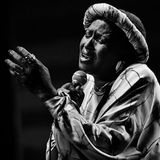
Makeba’s recorded voice brought South African repertoire into international concert circuits. Her United Nations appearances give a separate history of how she used that platform to speak against apartheid.

Long concert performances let Umm Kulthum revisit the same melodic phrase as the audience and ensemble responded. The length of a recorded performance is one clue to how much the singer could build from the repeated material.
“Weekend Special” and “Vulindlela” give two points at which to enter Fassie’s catalogue. Listen for how her delivery changes the energy of each recording while remaining recognisable in quite different arrangements.

Sangaré’s work draws on the Wassoulou region of Mali. Her recorded songs give the singer a forum to address women’s choices and social expectations within the musical framework of a voice-led ensemble.
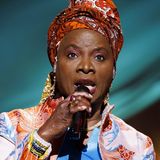
Kidjo’s catalogue stretches across collaborations and reworkings, including projects that approach other artists’ material through her own performance and arrangement choices. That range rewards following what changes from one project to another.
Bel’s work with Tabu Ley Rochereau and Afrisa International gives a route into Congolese rumba through the singer. Follow how the vocal carries the songs through different densities of instrumental arrangement.
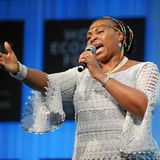
Chaka Chaka’s dance records show how a forceful vocal can give an audience a repeated phrase to take up. The music deserves scrutiny in its own right alongside the public-service work for which she later became known.
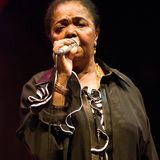
Évora’s recorded work made Cape Verdean song available to more international listeners. Compare the slower songs with those whose rhythm asks something different of her vocal timing.
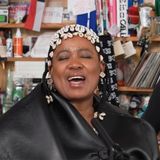
Mazwai’s work with Bongo Maffin and her solo career give two distinct points from which to hear her. The band setting and solo records ask different things of the same voice, which is a useful way into her range.

Tems’s contribution to “Essence” is a clear introduction to her phrasing. Her own recordings give a broader account of what she can do when the full narrative and transitions in a song belong to her.
“Urbanzulu” offers a way to hear the force of Mhlongo’s voice with a band that connects maskandi to an expansive studio sound. The recording lets listeners hear how a lead voice and a dense ensemble share the same pulse.

“Loliwe” is a useful opening into Zahara’s work because it leaves the voice and guitar easy to follow. The performance shows how an intimate arrangement can carry a widely recognised body of South African popular music.