

De Villiers took 31 balls to reach an ODI hundred against West Indies in Johannesburg in 2015. That match gives you a specific point of comparison for stroke range and the ability to change an innings quickly.
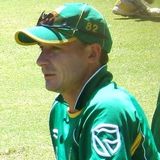
Steyn finished his Test career with 439 wickets from 93 matches. Consider how regularly he removed batters through pace and swing across conditions, including spells when the ball had stopped moving as much.

Smith opened and captained South Africa across a long Test career. His innings at the top of the order gave him a separate job from the choice of bowling changes and fields when his side had to defend a total.
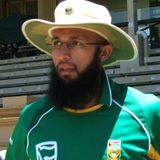
Amla made 311 not out against England at The Oval in 2012. The innings demonstrates the concentration and judgement needed to keep batting after the first hundred and to put time aside for the team’s bowlers.

Ntini took 390 Test wickets in 101 matches. Use the number of innings in which he had to return for another spell when judging the endurance that went with his pace.

Rabada took nine wickets in South Africa’s 2025 World Test Championship final win over Australia. The two innings show what a strike bowler could give the team across the full match.
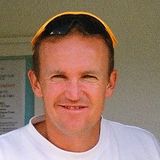
Flower made 232 not out against India in Nagpur and averaged above 50 across his Test career. Weigh his ability to bat long in Zimbabwe’s middle order together with the workload of keeping wicket.

Olonga took three wickets in the closing stages of Zimbabwe’s three-run win over India at the 1999 World Cup. The spell lets you assess what he could deliver when his team had almost no runs to spare.
Tikolo captained Kenya to the 2003 World Cup semifinals and hit a half-century against India in that match. His case combines the runs he supplied in the middle order with leading a team through a long tournament.
Streak took 216 Test wickets and scored useful lower-order runs for Zimbabwe. The workload of leading that attack across several seasons gives his candidacy a measure beyond one winning spell.
Taibu took on Zimbabwe’s Test captaincy as a young wicketkeeper-batter. Judge how he combined keeping, batting and captaincy when he was asked to hold several roles at once.
Raza’s 2022 performances combined ODI centuries with bowling contributions. His case is about how many different stages of a white-ball match Zimbabwe could ask him to influence.
Muzarabani took seven wickets in an innings against Ireland in Bulawayo in 2025. Watch what his height and bounce gave Zimbabwe when it needed to break through a batting order.
Williams scored 600 runs at an average of 100 in the 2023 ODI World Cup Qualifier and was named Player of the Tournament. Use that stretch to assess how frequently he could carry a Zimbabwe innings.
Odoyo took nine wickets at the 2003 World Cup and later scored his first first-class century for Kenya in the Intercontinental Cup. Those two records let voters judge the bowling and batting parts of his job.
Obuya took five wickets against Sri Lanka in Kenya’s 2003 World Cup win. His later career as a batter gives voters evidence across two distinct roles and a span of more than two decades.
Karim took three wickets for seven runs against Australia at the 2003 World Cup. The spell gives voters an example of how a left-arm spinner could make scoring difficult even against the eventual champions.
Erasmus was named ICC Men’s Associate Cricketer of the Year for 2024. Compare what he contributed with bat and ball through Namibia’s ODI and T20I schedule before weighing any one World Cup performance.
Wiese hit an unbeaten 66 against the Netherlands at the 2021 T20 World Cup to help Namibia recover a difficult chase. His match for Namibia follows an earlier international career with South Africa.
Frylinck scored 44 and took two wickets in Namibia’s win over Sri Lanka at the 2022 T20 World Cup. The match makes it easy to see his contribution in both innings.
Nsubuga took two wickets for four runs from four overs in Uganda’s first Men’s T20 World Cup win, against Papua New Guinea in 2024. That spell is evidence of control as well as wicket-taking.
Ramjani took 55 men’s T20I wickets in 2023 as Uganda secured its first World Cup place. His case rests on sustained wicket-taking across a calendar year as well as his part in the qualification campaign.
Masaba led Uganda to its first Men’s T20 World Cup appearance in 2024. Judge what he contributed with the ball and in directing the side through the Africa qualifier and the tournament itself.
Wolvaardt topped the 2025 ODI World Cup run charts and helped South Africa reach the final. Take the first overs and the length of the innings into account when comparing the work she did as an opener.
Kapp took 5 for 45 against England at the 2022 World Cup and helped South Africa finish the chase with the bat. The match gives a concrete example of what she can contribute in both innings.
Ismail led South Africa’s pace attack at multiple Women’s World Cups. Compare how she used speed with the new ball and what the team could ask of her when batters were trying to score quickly.
Van Niekerk took four wickets without conceding a run against West Indies at the 2017 Women’s World Cup. That spell gives voters a specific take on the threat she could pose with leg-spin.
Du Preez scored a Test century against India at Mysore in 2014. Include those long-form runs when weighing what she gave South Africa across a career with many more limited-overs appearances.
Lee was named ICC Women’s ODI Cricketer of the Year for 2021. Her batting gives voters a way to assess what an opener could do by putting the opposition under pressure early.
Pollock finished with 421 Test wickets for South Africa. His control of length and ability to contribute down the order meant the team could rely on him in more than one phase.
Donald took 330 Test wickets for South Africa. His record gives voters several years of evidence for the difference an opening fast bowler could make when the attack needed early wickets.
Rhodes ran out Inzamam-ul-Haq at the 1992 World Cup by breaking the stumps in a dive. Use the previous balls and the space he covered to judge the fielding effort, as well as the moment people remember.
Richards played four Tests for South Africa and averaged over 70 in that small sample. His first-class record gives voters a wider body of innings to consider in a career interrupted at international level.
Pollock averaged over 60 in 23 Tests. Compare his runs in a curtailed international career with the evidence from first-class cricket when weighing the level and length of his performances.
D’Oliveira played cricket in Cape Town before his Test career with England. His 158 against Australia at The Oval in 1968 provides an innings to judge alongside the exceptional circumstances that shaped his career.
De Kock scored 594 runs at the 2023 World Cup. His work at the top of the innings and behind the stumps gives voters two substantial roles to assess in that tournament.
Musonda made an unbeaten century as captain when Zimbabwe won its first women's ODI, against Ireland in 2021. The innings provides evidence of a batter pacing a chase in a first match at the format.
Mbabazi represented Uganda in the 2024 global T20 World Cup qualifier. Her spells and her batting appearances give voters two ways to assess an all-rounder through the senior international record.
Ishimwe closed out a Rwanda victory with four wickets in four balls at the 2023 Under-19 Women’s T20 World Cup. Her later and concurrent senior appearances provide a wider record against which to judge that spell.
Abel made 206 runs and took 11 wickets at the 2023 Kwibuka tournament. Those performances formed part of the year in which the ICC named her Women’s Associate Cricketer of the Year.
Kibasu’s innings against Eswatini at the 2021 regional qualifier shows how she used a full T20 innings to build a very large individual score. Compare the scorecard with her senior record against other opponents.
Klusener was Player of the Tournament at the 1999 World Cup. The innings and spells that earned the award give voters a fuller view of his tournament than its famous semifinal finish alone.
No entries from this region on this list yet.
About this ranking
Read the figures with the format in mind
Jacques Kallis made 13,289 Test runs and took 292 wickets. AB de Villiers reached an ODI hundred in 31 balls. Uganda’s Frank Nsubuga conceded four runs and took two wickets in a four-over Men’s T20 World Cup spell. Those records tell you different things over quite different spans of play. Consider what a side needed at the point when the runs were made or the wickets fell.
Look at what one player changed
Marizanne Kapp took five wickets and contributed to the chase when South Africa beat England at the 2022 Women’s World Cup. Zimbabwe’s Mary-Anne Musonda paced a winning chase in her country’s first women’s ODI. Kenya’s Queentor Abel scored runs and took wickets across the 2023 Kwibuka tournament. The scorecards let you see what each player achieved within a match and what could be repeated across an event.
Consider the opportunities a player had
Steve Tikolo led Kenya to the 2003 World Cup semifinals. Andy Flower put together a long Zimbabwe career as a batter and wicketkeeper. Namibia’s Gerhard Erasmus earned recognition across an associate schedule that offers different opportunities from regular Test cricket. For a bowler, compare Kagiso Rabada’s nine wickets in a World Test Championship final with Collins Obuya’s five against Sri Lanka in a World Cup upset. Ask what the opposition required of the player and how often that player got the chance to meet a similar test.
The ballot includes women and men across cricket formats. It covers senior representatives of African countries and African-born players with substantial playing ties to African cricket. The notes name the international team, including dual representation where it applies. For a wider comparison across disciplines, see the African athletes ballot.
Think someone is missing from this list?
Suggest an entry and we'll review it for inclusion.