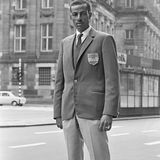
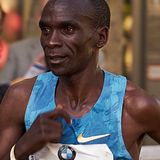
A world 5,000-metre champion in 2003, Kipchoge reinvented himself on the roads and won Olympic marathon titles in 2016 and 2020. He broke the official marathon world record twice and ran 1:59:40 in Vienna in 2019 under specially controlled conditions, a landmark achievement not eligible as an official world record.
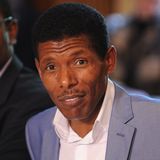
Gebrselassie's finishing speed and remarkable consistency made him a dominant figure over 10,000 metres, winning Olympic gold in 1996 and 2000 and four outdoor world titles at the distance. He subsequently broke the marathon world record, including a 2:03:59 performance in Berlin in 2008, extending his influence from the track to the roads.
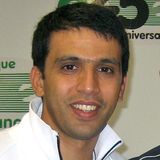
El Guerrouj built an extraordinary record over 1,500 metres, winning four consecutive outdoor world titles and setting a world record of 3:26.00 in 1998. After Olympic disappointments in 1996 and 2000, he won both the 1,500 and 5,000 metres at Athens in 2004, a rare display of range and tactical intelligence.
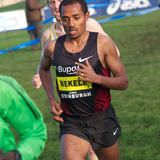
Bekele combined formidable endurance with a devastating finishing kick to win three Olympic gold medals and five individual outdoor world track titles. He was equally exceptional in cross-country, taking eleven senior individual world titles across the short and long courses, before becoming a major marathon champion in Berlin.
Kipyegon won three consecutive Olympic 1,500-metre titles at Rio, Tokyo and Paris, an unprecedented achievement in the event. She added her fourth outdoor world title at the distance in Tokyo in 2025 and repeatedly lowered the world record. Her blend of efficient movement, acceleration and championship composure has redefined women's middle-distance racing.

Eto'o won Olympic gold in 2000, two Africa Cup of Nations titles and four African Footballer of the Year awards. At club level he won the Champions League with Barcelona and Inter Milan, scoring in two finals. His movement, finishing and relentless work without the ball made him a striker of exceptional versatility.
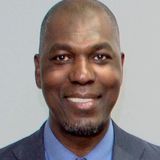
Born in Lagos, Olajuwon developed into one of basketball's most complete centres. His footwork, shot-blocking and scoring led Houston to consecutive NBA titles in 1994 and 1995. In 1994 he collected the league MVP, Defensive Player of the Year and Finals MVP awards, and later won Olympic gold for the United States. Origins and affiliation: Nigeria; represented the United States.
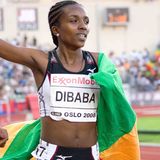
Dibaba's combination of endurance and sprinting ability brought Olympic gold over both 5,000 and 10,000 metres in Beijing in 2008. She retained the 10,000-metre title in London and amassed five outdoor world track titles. Her success in cross-country further established her as an outstanding runner across surfaces and distances.
Hassan moved from Ethiopia to the Netherlands as a teenager and developed into a remarkably versatile distance runner. She won Olympic 5,000 and 10,000-metre gold in Tokyo, then marathon gold and two track bronzes in Paris. Her ability to compete across middle-distance, long-distance and road events is exceptional. Origins and affiliation: Ethiopia-born; represented the Netherlands.
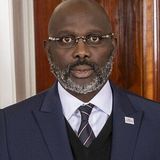
Weah rose from Liberian football to become a feared striker for Monaco, Paris Saint-Germain and AC Milan. In 1995 he won both the Ballon d'Or and FIFA World Player of the Year. His power, acceleration and individual ability made him a transformative figure for African footballers seeking opportunities at the highest club level.
Rudisha delivered a defining middle-distance performance at London 2012, leading the 800-metre final from the front and winning in a world record 1:40.91. He retained his Olympic title in Rio and won two outdoor world titles. His long stride and ability to sustain exceptionally fast pace distinguished him from his contemporaries.
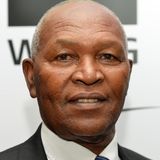
Keino won Olympic gold in the 1,500 metres in Mexico City in 1968 and the steeplechase in Munich in 1972, alongside two silver medals. His victories helped establish Kenya's international running tradition at a time when African athletes had far fewer professional opportunities.
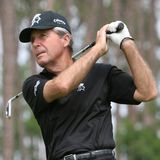
Player won nine major championships, completing the career Grand Slam with the 1965 US Open. His success on courses across the world and his emphasis on physical conditioning helped shape professional golf's international era. The Black Knight also won nine senior majors, demonstrating exceptional competitive longevity.
El Sherbini emerged as a teenage squash prodigy and won her first senior world title at the championship held in 2016. By 2025 she had won eight individual world championships. Her attacking shot selection, anticipation and ability to raise her level at major tournaments have placed her among the outstanding players in the sport's history.
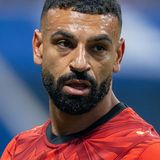
Salah's acceleration, intelligent movement and left-footed finishing transformed him into a leading forward at Liverpool. He helped the club win the 2019 Champions League and Premier League titles in 2020 and 2025. For Egypt, his goals helped secure a return to the World Cup in 2018 after a 28-year absence.
Mutola won Mozambique's first Olympic gold medal in Sydney in 2000 and captured three outdoor world 800-metre titles. Her exceptional indoor record included seven world titles. For more than a decade she remained a formidable championship racer, relying on tactical awareness and strength over the final bend.
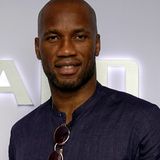
A powerful centre-forward whose presence extended beyond scoring, Drogba was central to Chelsea's rise and its first Champions League triumph in 2012. He scored the late equaliser and converted the decisive shootout penalty in the final. Twice African Footballer of the Year, he helped Côte d'Ivoire qualify for its first World Cup in 2006.
Born in present-day Somaliland and brought to Britain as a child, Farah became an exceptional championship racer. He won the 5,000 and 10,000 metres at both London 2012 and Rio 2016 and accumulated six outdoor world titles. His victories combined efficient positioning, acceleration and the ability to control closely contested finals. Origins and affiliation: Somali heritage; represented Great Britain.
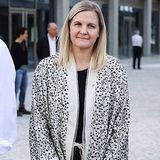
Coventry earned seven Olympic medals for Zimbabwe, including consecutive 200-metre backstroke golds in Athens and Beijing. She also won world titles and set backstroke world records during her career. Her success gave Zimbabwe a sustained presence at the highest level of international swimming.
Chebet completed the 5,000 and 10,000-metre double at the Paris Olympics and repeated it at the 2025 World Championships in Tokyo. In July 2025 she became the first woman to run 5,000 metres in under 14 minutes. Her world cross-country victories further illustrate her strength beyond track racing.
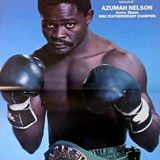
Known as the Professor, Nelson won world championships at featherweight and super featherweight. His tactical adaptability, counterpunching and ability to compete through long title reigns earned him a place in the International Boxing Hall of Fame. His victories over Wilfredo Gómez and Jeff Fenech are among the defining performances of his career.
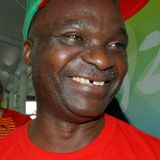
Milla helped Cameroon win two Africa Cup of Nations titles and became an enduring World Cup figure through his four goals at Italia 1990, aged 38. Cameroon's run to the quarter-finals changed expectations for African national teams. Four years later he scored again at the World Cup at 42.
Tulu became the first Black African woman to win Olympic gold when she captured the 10,000 metres at Barcelona in 1992. She regained the title eight years later in Sydney and won the 2001 world championship at the distance. Her pioneering success opened doors for subsequent generations of Ethiopian women runners.
Cheptegei won three consecutive outdoor world 10,000-metre titles from 2019 to 2023, Olympic 5,000-metre gold in Tokyo and 10,000-metre gold in Paris. His world-record performances over both track distances in 2020 established Uganda as a leading force in modern men's distance running.
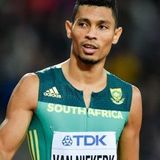
Van Niekerk ran 43.03 seconds in lane eight of the Rio Olympic 400-metre final, breaking Michael Johnson's long-standing world record. He won world titles in 2015 and 2017 and demonstrated unusual sprint range by breaking ten seconds for 100 metres, twenty for 200 and forty-four for 400.
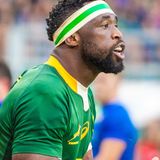
Kolisi captained the Springboks to Rugby World Cup victories in 2019 and 2023. A mobile flanker with strong defensive instincts and considerable influence on team cohesion, he became the first Black captain of South Africa's men's Test side. His leadership formed part of an exceptional era of Springbok rugby.

Kallis scored 13,289 Test runs and took 292 wickets in 166 Tests, a combination of batting and bowling excellence rarely matched in cricket. His technically assured batting, seam bowling and catching were central to South Africa's success across nearly two decades of international competition.

Abedi Pelé's balance, close control and creative passing made him a defining African playmaker of the early 1990s. A three-time African Footballer of the Year, he helped Ghana win the 1982 Africa Cup of Nations and Marseille win the 1993 Champions League, providing the corner from which the final's only goal was scored.
Scheckter won the 1979 Formula One world drivers' championship with Ferrari, having previously won races for Tyrrell and Wolf. He recorded ten Grand Prix victories during his career. His development from an aggressive young driver to a disciplined title contender made him a distinguished figure in African motorsport.
Born in Nairobi and introduced to cycling in Kenya, Froome represented Kenya at the 2006 Commonwealth Games before switching to British sporting affiliation. He won four Tours de France, two Vuelta a España titles and the 2018 Giro d'Italia, building an exceptional Grand Tour record through climbing, time-trialling and sustained endurance. Origins and affiliation: Kenya-born; represented Kenya and later Great Britain.
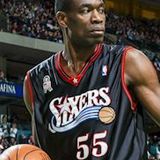
Mutombo's rim protection, rebounding and defensive positioning earned him four NBA Defensive Player of the Year awards. An eight-time All-Star, he helped Denver produce a famous playoff upset in 1994. His influence also extended to humanitarian work in the Democratic Republic of Congo, notably the hospital he established in Kinshasa.
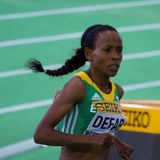
Defar won Olympic 5,000-metre gold in Athens in 2004 and again in London in 2012. A two-time outdoor world champion at the distance, she also won four world indoor 3,000-metre titles. Her powerful closing laps made her a formidable rival in Ethiopian and international distance running.
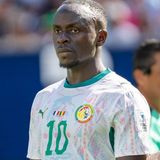
Mané's pace, pressing and direct attacking style made him a vital part of Liverpool's Champions League and Premier League triumphs. He converted the decisive penalty when Senegal won its first Africa Cup of Nations title at the tournament played in 2022 and twice received the African Footballer of the Year award.
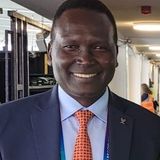
Tergat won five successive senior long-course world cross-country titles between 1995 and 1999 and two Olympic 10,000-metre silvers. His memorable rivalry with Haile Gebrselassie preceded an outstanding road career, including a marathon world record of 2:04:55 in Berlin in 2003.

At Atlanta in 1996, Heyns became the first woman to win both Olympic breaststroke distances at the same Games. She broke multiple world records during her career and added a bronze medal in Sydney. Her technical control and explosive speed helped restore South Africa's international swimming prominence after readmission to the Olympics.
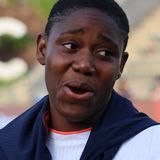
Oshoala won six CAF Women's Player of the Year awards by 2023, following her emergence as a star at the 2014 under-20 World Cup. She helped Nigeria win multiple African championships and Barcelona win European club titles. Her pace, physical strength and scoring instincts made her a prominent figure in African women's football.
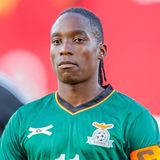
Banda scored hat-tricks in consecutive matches at the Tokyo Olympics, a landmark achievement in women's Olympic football. She helped Zambia reach its first Women's World Cup and won the 2024 NWSL championship with Orlando Pride, earning final MVP honours. Her pace and finishing earned her the 2024 CAF Women's Player of the Year award.
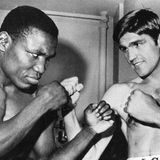
Tiger developed his career from Nigerian boxing rings to the world's leading venues, winning world championships at middleweight and light heavyweight. His compact, aggressive style and remarkable physical strength brought victories against elite opponents including Gene Fullmer and José Torres. He was inducted into the International Boxing Hall of Fame.
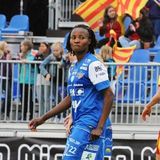
Nkwocha won four African Women's Player of the Year awards and was a prolific scorer for Nigeria during several African championship campaigns. Her strength, finishing and ability to play different attacking roles distinguished a career that also included World Cups, Olympic tournaments and club football in Sweden.
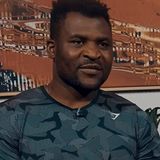
Ngannou rose from Cameroon to the UFC heavyweight championship, defeating Stipe Miocic in 2021 and defending the title against Ciryl Gane. His knockout power and improved wrestling made him a formidable heavyweight. He later competed in professional boxing and won a major PFL heavyweight contest in 2024.
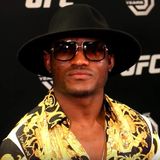
Born in Nigeria, Usman developed his wrestling in the United States and became UFC welterweight champion in 2019. He defended the title five times, using his grappling, conditioning and increasingly effective striking to defeat leading contenders. His long winning streak established him as a major champion in the division.
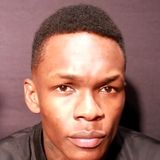
Born in Lagos and raised partly in Nigeria before moving to New Zealand, Adesanya became a two-time UFC middleweight champion. His background in kickboxing informed a distinctive style built around distance control, feints and precise counterstriking. He reclaimed the championship in 2023 by defeating Alex Pereira. Origins and affiliation: Nigeria; represented New Zealand in combat sports.
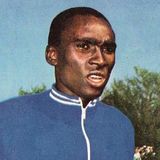
Akii-Bua won Uganda's first Olympic gold medal in Munich in 1972, breaking the 400-metre hurdles world record with 47.82 seconds from the inside lane. His speed and ability to maintain hurdling rhythm made that victory a landmark for African athletes in events outside distance running.
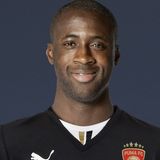
Touré's combination of strength, passing range and forward surges made him an influential midfielder for Barcelona and Manchester City. Four consecutive African Footballer of the Year awards recognised his sustained peak. He captained Côte d'Ivoire to the 2015 Africa Cup of Nations title, crowning a distinguished international career.
Morceli won three consecutive outdoor world 1,500-metre titles from 1991 to 1995 and Olympic gold in Atlanta in 1996. He broke world records in the 1,500 metres and mile, among other distances. His commanding front-running and long acceleration defined middle-distance racing in the early 1990s.
Ashour won three senior world championships, in 2008, 2012 and 2014, and reached world number one. His imaginative shot-making, disguise and ability to create winners from improbable positions made him a particularly influential squash player, even as injuries interrupted his career.
Shabana won four world championships between 2003 and 2009 and became the first Egyptian man to reach the top of the professional squash rankings. His exceptional racket control and attacking accuracy helped usher in the era of Egyptian dominance of international squash.
Farag won four individual world championships between 2019 and 2023 and spent extensive periods as world number one. His anticipation, efficient movement and ability to neutralise attacking opponents made him a defining player of modern Egyptian squash. He also represented Egypt in world team championship victories.
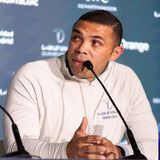
Habana was named world player of the year after helping South Africa win the 2007 Rugby World Cup. He scored 67 Test tries for the Springboks and 15 across World Cup tournaments. His exceptional speed was matched by intelligent support running and the ability to read opposition passes.
Matfield's lineout reading and aerial control made him one of rugby's most influential locks. He played 127 Tests for South Africa and was named player of the match in the 2007 Rugby World Cup final. His technical understanding helped define a successful generation of Springbok forwards.
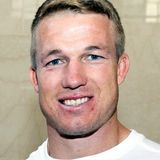
Du Toit helped South Africa win consecutive Rugby World Cups in 2019 and 2023 and was named world player of the year in 2019 and 2024. His relentless tackling, work rate and versatility across the back row and second row made him a crucial part of the Springbok pack.

Etzebeth's strength in contact, lineout work and relentless physical presence helped South Africa win the Rugby World Cups of 2019 and 2023. He surpassed Victor Matfield's Springbok Test appearance record in 2024, reflecting a lengthy career at the heart of an exceptionally successful international forward pack.
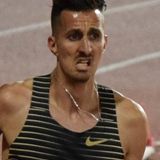
El Bakkali broke Kenya's long Olympic winning streak in the men's steeplechase by claiming gold in Tokyo, then retained his title in Paris. He also won outdoor world titles in 2022 and 2023. His efficient barrier clearance and finishing speed made him a leading championship specialist.
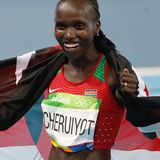
Cheruiyot won Olympic 5,000-metre gold in Rio in 2016, having secured 10,000-metre silver at the same Games. She collected four outdoor world track titles and later won the London Marathon in 2018. Her career combined outstanding championship speed with a successful transition to road racing.
Mellouli won the Olympic 1,500-metre freestyle in Beijing and the 10-kilometre open-water event in London, where he also took pool bronze. His ability to succeed in controlled pool racing and unpredictable open water made him a particularly versatile Olympic swimming champion.
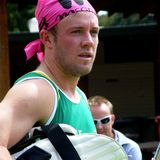
De Villiers combined textbook batting with an extraordinary ability to score in unconventional areas. He amassed more than 20,000 international runs and hit a 31-ball ODI century against West Indies in 2015. His versatility as a batter, wicketkeeper and fielder made him one of cricket's most influential modern players.
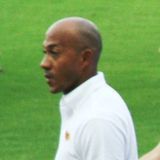
Fredericks won Olympic silver in both the 100 and 200 metres in Barcelona and repeated the double in Atlanta. He won the 1993 world 200-metre title and remained competitive across an unusually long sprinting career. His four Olympic medals were historic achievements for newly independent Namibia.
Kemboi won Olympic steeplechase gold in Athens and London and four successive outdoor world titles from 2009 to 2015. His confident positioning, economical hurdling and explosive acceleration after the final barrier sustained Kenya's dominance of the event for more than a decade.
Born Stephen Cherono in Kenya, Shaheen represented Qatar and won the 2003 and 2005 world steeplechase titles. His 7:53.63 performance in 2004 was a world record that lasted nearly nineteen years. His career illustrates the outstanding athletic talent developed in Kenya and the complexities of international sporting affiliation. Origins and affiliation: Kenya-born; represented Qatar.
El Moutawakel won the first women's Olympic 400-metre hurdles final at Los Angeles in 1984, becoming Morocco's first Olympic champion. Her victory was particularly significant for women in Arab and African sport, demonstrating what could be achieved in an event then making its Olympic debut.
Girmay won Gent–Wevelgem and a Giro d'Italia stage in 2022, breaking new ground for African road cyclists. At the 2024 Tour de France he won three stages and the green jersey points classification. His ability to contest demanding one-day races and bunch sprints made those achievements more than isolated breakthroughs.
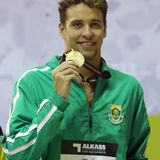
Le Clos defeated Michael Phelps in the Olympic 200-metre butterfly final in London in 2012 and also earned silver over 100 metres. He won multiple long-course world titles and added two Olympic silver medals in Rio. His aggressive racing style made him a prominent figure in international butterfly swimming.
After losing part of her left leg in a road accident, Du Toit returned to competitive swimming and won thirteen Paralympic gold medals. In Beijing in 2008 she also competed in the Olympic 10-kilometre open-water race. Her exceptional endurance and range distinguished a career spanning both Olympic and Paralympic competition.

Els won four major championships, including two US Opens and two Open Championships. His smooth swing, power and control earned him the nickname the Big Easy. A former world number one, he enjoyed sustained international success across the PGA and European tours, as well as victories in his home country.
Boulmerka won the 1,500-metre world title in 1991 and 1995, with Olympic gold in Barcelona between them. Her powerful finishing speed made her an outstanding championship runner. She achieved these victories while facing opposition to women's participation in sport, becoming a significant figure in Algeria's sporting history.
Bile won the 1987 world 1,500-metre title in Rome, becoming Somalia's first world athletics champion. He added bronze in 1993 and competed in the 1996 Olympic final. His long-striding acceleration and strength in fast races made him an influential figure in Somali sporting history.
Competing as Tatjana Schoenmaker in Tokyo, Smith won Olympic 200-metre breaststroke gold in world-record time and silver over 100 metres. At Paris 2024 she won the shorter event and took silver in the longer race. Four Olympic medals demonstrate her sustained excellence across both breaststroke distances.
Black reached world number one in doubles and won ten Grand Slam titles across women's and mixed doubles. She completed the career Grand Slam in mixed doubles, forming successful partnerships with several leading players. Her quick reactions at the net and intelligent positioning sustained a long international career.
Born and raised in South Africa, Kriek won the Australian Open singles championships of 1981 and 1982. He reached a career-high singles ranking of seventh and also made deep runs at other majors. His athletic movement and versatile game sustained a successful professional career after relocating to the United States. Origins and affiliation: South Africa; later represented the United States.
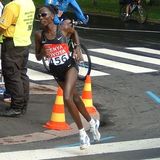
Ndereba won world marathon titles in 2003 and 2007 and Olympic silver in Athens and Beijing. A four-time Boston Marathon winner, she also broke the women's world marathon record in Chicago in 2001. Her ability to handle both fast courses and championship conditions made her a particularly consistent performer.
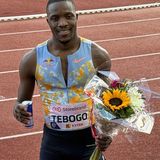
Tebogo won the 200 metres at Paris 2024, bringing Botswana its first Olympic gold medal, and anchored the country's 4 × 400-metre relay to silver. His 19.46-second Olympic victory followed world medals over both 100 and 200 metres in 2023, highlighting his exceptional sprint range.
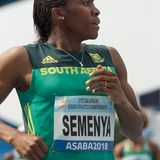
Semenya won two Olympic 800-metre gold medals and three outdoor world titles at the distance. Her strength and long finishing drive defined many championship performances. Her career was also shaped by contested eligibility regulations concerning differences of sex development, which she challenged through legal proceedings.
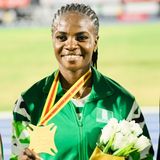
Amusan set a 12.12-second world record in the semifinals of the 2022 World Championships and went on to win the final, becoming Nigeria's first outdoor world athletics champion. Her quick starts, efficient hurdling and Commonwealth titles established her as a leading figure in sprint hurdling.
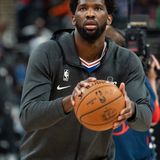
Embiid began playing organised basketball as a teenager in Cameroon before developing into an elite NBA centre. His scoring, footwork and defensive presence earned him the 2022–23 NBA MVP award and two league scoring titles. He won Olympic gold with the United States in Paris in 2024. Origins and affiliation: Cameroon; represented the United States.
Nash was born in Johannesburg to British parents and moved to Canada at around eighteen months old. His achievements were made primarily in North American basketball, where his outstanding passing and efficient shooting earned consecutive NBA MVP awards in 2005 and 2006. His inclusion reflects his African birthplace, not an African national-team career. Origins and affiliation: South Africa-born; raised in and represented Canada.
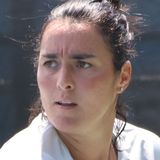
Jabeur reached three Grand Slam singles finals in 2022 and 2023 and climbed to world number two. Her creative use of spins, angles and drop shots made her distinctive on the professional tour. She became the first Arab and African woman of the Open Era to reach a Grand Slam singles final.
Gohar reached world number one and captured the world championship in 2024 after several appearances in the final. Known for the pace and depth of her hitting, she developed into a highly consistent tournament winner and a leading rival to Nour El Sherbini during Egypt's dominant period in women's squash.
El Welily became the first Egyptian woman to reach world number one in squash in 2015 and captured the world championship in 2017. Her quick reactions and imaginative attacking play helped establish Egypt's dominance in women's professional squash. She retired while ranked world number one in 2020.
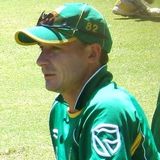
Steyn took 439 Test wickets with a combination of pace, late swing and relentless accuracy. His ability to take wickets in different conditions made him central to South Africa's success away from home. He spent a sustained period among the highest-ranked Test bowlers and was named ICC Test Player of the Year in 2008.
Mitchell won the WBA super featherweight title in 1986 and defended it twelve times, frequently travelling abroad because of sporting restrictions on apartheid-era South Africa. He subsequently won the IBF title in the same division and was inducted into the International Boxing Hall of Fame.
Mugabi won Olympic welterweight silver at Moscow in 1980 before turning professional. Known as the Beast, he built a reputation for knockout power and fought Marvin Hagler in a celebrated middleweight championship contest in 1986. He later won the WBC super welterweight title, adding a professional world championship to his Olympic achievement.
Born in what is now the Democratic Republic of Congo, Kalambay built his professional career in Italy. He won the WBA middleweight title in 1987 and defeated distinguished opponents including Mike McCallum. His defensive skill, timing and counterpunching made him an outstanding technical boxer of his generation. Origins and affiliation: DR Congo; represented Italy in boxing.
Gammoudi won four Olympic medals across three Games, highlighted by his 5,000-metre gold at Mexico City in 1968. He also earned medals over 10,000 metres and finished second in the 5,000 metres in Munich. His career established Tunisia among the early African powers in distance running.
Kiptanui won three consecutive world steeplechase titles from 1991 to 1995 and became the first athlete to break eight minutes in the event. He earned Olympic silver in Atlanta and also set world records on the flat, bringing exceptional speed to the barriers.
Ngugi won the 5,000 metres at the Seoul Olympics in 1988 after breaking clear of the field. He also claimed five senior world cross-country titles between 1986 and 1992. His aggressive front-running was especially effective over difficult terrain, where he built one of the outstanding cross-country records of his era.
Wolde won the Olympic marathon at Mexico City in 1968 and took 10,000-metre silver at the same Games. He added marathon bronze at Munich in 1972. His ability to excel across track and road events helped sustain Ethiopia's early dominance of Olympic distance running after Abebe Bikila.
Wanjiru won Kenya's first Olympic marathon gold in Beijing in 2008, setting an Olympic record in hot conditions. He subsequently won major races in London and Chicago, including a memorable tactical victory in Chicago in 2010. His death in 2011 cut short a career of exceptional promise and achievement.
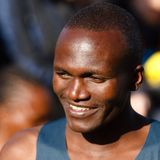
Kiprotich won Olympic marathon gold in London in 2012 and followed it with the world championship title in Moscow in 2013. His decisive late moves and tactical patience enabled him to defeat formidable East African rivals, delivering Uganda's first Olympic marathon title and two landmark championship victories.
Bwalya was named African Footballer of the Year in 1988, the year he scored a hat-trick against Italy at the Seoul Olympics. Following the 1993 air disaster that devastated Zambia's national team, he captained its rebuilt side to the 1994 Africa Cup of Nations final. His playing career remains central to Zambia's football heritage.
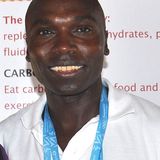
Born in Kenya, Kipketer represented Denmark and won three consecutive outdoor world 800-metre titles from 1995 to 1999. He broke the world record and ran 1:41.11 in Cologne in 1997, a mark that stood for thirteen years. His Olympic medals in 2000 and 2004 added to a distinguished career. Origins and affiliation: Kenya; represented Denmark.
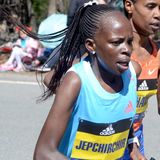
Jepchirchir won Olympic marathon gold in Tokyo and the New York City Marathon later in 2021, followed by Boston in 2022 and London in 2024. A multiple world half-marathon champion, she set a women-only marathon world record in London, combining endurance with considerable tactical skill.
Yego taught himself much of his throwing technique through online videos before becoming a global javelin champion. He won the 2015 world title with a throw of 92.72 metres and Olympic silver in Rio. His success challenged assumptions about the events in which Kenyan athletes could excel.
Obiri won consecutive outdoor world 5,000-metre titles in 2017 and 2019, Olympic silver at the distance in Rio and Tokyo, and world cross-country gold in 2019. She subsequently won major marathons in Boston and New York and earned Olympic marathon bronze in Paris, demonstrating remarkable range.
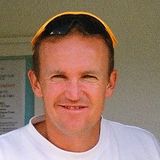
Flower carried much of Zimbabwe's batting responsibility while keeping wicket, finishing his Test career with an average above 51. His ability to play long innings against leading attacks brought him to the top of the Test batting rankings. He became Zimbabwe's first ICC Hall of Fame inductee in 2021.
Nemour won Olympic uneven bars gold at Paris 2024, becoming Africa's first Olympic artistic gymnastics medallist. She had already won world silver on the apparatus in 2023. Her routines combine extremely difficult connections with refined execution, bringing Algeria to the forefront of international gymnastics. Origins and affiliation: Algeria; born in France.
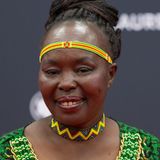
Loroupe became the first African woman to win the New York City Marathon in 1994 and repeated the victory the following year. She twice set marathon world records and won three world half-marathon titles. Her running success was followed by significant peacebuilding and refugee-sport initiatives.
El-Touny won Olympic middleweight gold at Berlin in 1936, setting exceptional lifting marks in a performance that also surpassed the winning total in the heavier light-heavyweight category. He later won world titles and became an enduring figure in Egypt's distinguished early weightlifting tradition.
Roba won Olympic marathon gold in Atlanta in 1996, becoming the first African woman to win the event. She followed that breakthrough with three consecutive Boston Marathon victories from 1997 to 1999. Her endurance and consistency helped build Ethiopia's international women's road-running tradition.
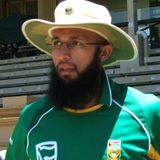
Amla's calm temperament and precise strokeplay made him a leading international batter in Tests and one-day cricket. In 2012 he became the first South African to score a Test triple century, making an unbeaten 311 at The Oval. He finished with 55 international centuries across formats.
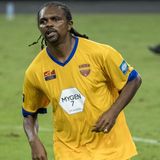
Kanu captained Nigeria to Olympic football gold in Atlanta in 1996, scoring twice in the dramatic semifinal against Brazil. A Champions League winner with Ajax and two-time African Footballer of the Year, he later excelled at Arsenal after undergoing major heart surgery. His creativity and touch distinguished his playing style.

Okocha's dribbling, creativity and improvisation made him one of African football's most recognisable playmakers. He won the Africa Cup of Nations in 1994 and Olympic gold in 1996, later starring in Germany, Turkey, France and England. His performances influenced a generation of attacking midfielders.
Ayana won the Rio Olympic 10,000 metres in a then world-record 29:17.45 and added bronze over 5,000 metres. She won outdoor world titles at both distances across the 2015 and 2017 championships. Her sustained fast pace from the middle of a race could dismantle even exceptional fields.
Dibaba won the 2015 world 1,500-metre championship and Olympic silver in Rio. Her 3:50.07 world record in 2015 transformed expectations for the women's event. Multiple world indoor titles and record performances over several distances established her as a leading middle-distance runner of her generation.
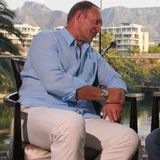
Pienaar captained South Africa to its first Rugby World Cup title in 1995, leading a side that defeated New Zealand in the final. A hard-working flanker and influential captain, he became associated with a sporting moment of particular significance in the country's transition from apartheid.
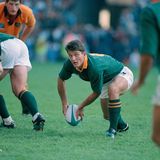
Van der Westhuizen was a dynamic scrum-half whose powerful defence and running game made him central to South Africa's 1995 Rugby World Cup victory. He scored 38 tries in 89 Tests, an exceptional tally for a scrum-half, and represented the Springboks at three World Cups.
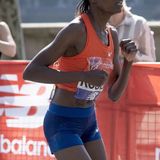
Kosgei lowered the women's marathon world record to 2:14:04 at Chicago in 2019, surpassing Paula Radcliffe's long-standing mark. She won major marathons in Chicago and London and secured Olympic silver in Tokyo. Her exceptional pace placed her at the forefront of a new era in women's marathon racing.
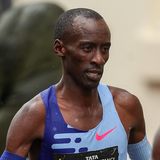
Kiptum won all three marathons he completed, in Valencia, London and Chicago, progressing to a world record of 2:00:35 in October 2023. His extraordinarily fast second halves transformed expectations for marathon performance. His death in February 2024 ended a brief but historically significant career.
Ejike won Paralympic gold medals in Athens, Beijing and Rio across a career spanning multiple weight categories. She repeatedly broke world records and earned medals at five consecutive Paralympic Games from 2000 to 2016, demonstrating the technique and strength behind Nigeria's international powerlifting success.
Oluwafemiayo won Paralympic gold at Tokyo and Paris, following silver at London in 2012. In Paris she repeatedly broke the world record in the women's over-86kg category. She continued her record-breaking form at the 2026 Commonwealth Games, underlining her sustained excellence at international level.
Wanyonyi won Olympic 800-metre gold at Paris in 2024 and added the outdoor world title in Tokyo in 2025. His ability to sustain exceptionally fast opening laps and resist late challenges has placed him among the most accomplished young two-lap runners in Kenyan history.
Gidey won the 2022 world 10,000-metre title and earned Olympic bronze at that distance in Tokyo. Her 29:01.03 in 2021 and 14:06.62 over 5,000 metres in 2020 were world records at the time. Her extraordinary endurance also produced a world-record half-marathon performance.
Hafnaoui stunned the field by winning Olympic 400-metre freestyle gold in Tokyo at just 18. In 2023 he won world titles in the 800 and 1,500 metres and silver over 400 metres. His performances established a notable range across middle- and long-distance pool swimming.
Cloete won back-to-back outdoor world high-jump titles in 2001 and 2003 and Olympic silver in Sydney and Athens. Her consistency at global championships and personal best of 2.06 metres made her one of Africa's most accomplished high jumpers.
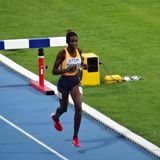
Chemutai became the first Ugandan woman to win Olympic gold with her 3,000-metre steeplechase victory in Tokyo. She returned to win silver in Paris in 2024, confirming her standing among the leading championship runners in the event. Her barrier technique and strong final laps underpin her success.
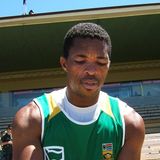
Ntini became the first Black African cricketer to represent South Africa in Tests and went on to take 390 wickets in 101 matches. His powerful run-up, stamina and ability to generate uncomfortable bounce made him a crucial part of the Proteas attack, including a ten-wicket performance at Lord’s in 2003.
Keïta won the inaugural African Footballer of the Year award in 1970. A prolific forward at Saint-Étienne, he helped the French club win league titles and later played in Spain, Portugal and the United States. His goals and technical ability made him a pioneering figure for African players in European football.

Madjer scored his famous backheeled equaliser and set up Porto's winner in the 1987 European Cup final against Bayern Munich. He was named African Footballer of the Year that year and helped Algeria win its first Africa Cup of Nations title in 1990. His technical creativity made him one of the era's most distinctive forwards.
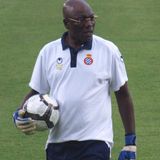
N'Kono won African Footballer of the Year twice, an exceptional achievement for a goalkeeper. His performances for Cameroon at the 1982 and 1990 World Cups attracted international admiration, and he established himself at Espanyol in Spain. His agility and commanding presence inspired later generations of goalkeepers.
Wami won the 1999 world 10,000-metre title and three Olympic medals, including silver over 10,000 metres in Sydney. She also earned senior world cross-country titles and went on to win the Berlin Marathon. Her career bridged the track, cross-country and road-running generations of Ethiopian distance running.
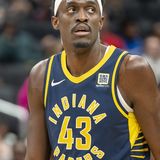
Siakam's journey from Cameroon to professional basketball culminated in an NBA championship with Toronto in 2019, when he was also named the league's Most Improved Player. His mobility, versatile scoring and ability to defend several positions earned him multiple All-Star selections and a substantial role on deep playoff teams.
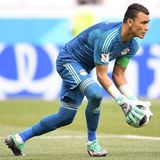
El Hadary won four Africa Cup of Nations titles with Egypt and was a leading goalkeeper in the team's three consecutive triumphs from 2006 to 2010. At 45, he became the oldest player to appear at a men's World Cup when he played in Russia in 2018, saving a penalty in his only match.
Donald brought genuine pace and hostility to South Africa's bowling attack following its return to international cricket. He took 330 Test wickets and 272 ODI wickets. His ability to combine speed with accuracy made him a defining fast bowler of the 1990s and earned him induction into the ICC Hall of Fame.
Pollock took 421 Test wickets while also contributing valuable lower-order runs, finishing with a batting average above 30. His control of seam movement and consistent line made him a particularly economical bowler. He captained South Africa and earned induction into the ICC Hall of Fame.

Smith became South Africa's Test captain at 22 and led the team in more than 100 Tests. A powerful left-handed opener, he scored 9,265 Test runs and played a central role in series victories in England and Australia. His leadership and durability defined a lengthy period of South African cricket.
Edris won consecutive outdoor world 5,000-metre titles in 2017 and 2019. His tactical awareness and fast finishing speed enabled him to defeat some of the outstanding distance runners of his generation, including Mo Farah in the London world championship final in 2017.
Ajunwa won Nigeria's first individual Olympic gold medal in Atlanta in 1996, jumping 7.12 metres in the long jump final. She had previously played international football for Nigeria. Her career included a doping suspension before her Olympic victory, an important part of the context surrounding her sporting record.
Omanyala ran 9.77 seconds over 100 metres in Nairobi in 2021, setting an African record, and won the Commonwealth and African titles in 2022. He emerged as an international sprint contender from a country better known for distance running. His earlier career included an anti-doping suspension served in 2017–18.
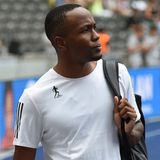
Simbine won the 2018 Commonwealth 100-metre title and consistently reached major championship sprint finals. He anchored South Africa to Olympic 4 × 100-metre relay silver at Paris 2024. His longevity as a sub-ten-second sprinter has made him an important figure in South African track history.
Coetzer rose to world number three in singles in 1997 despite being considerably shorter than many of her leading rivals. Her movement, consistency and exceptional defensive skills earned her victories against top-ranked players. She reached three Grand Slam singles semifinals and won nine WTA singles titles.
Coetzee became WBA heavyweight champion in 1983 by stopping Michael Dokes. His powerful right hand and success against leading international heavyweights established him as a major figure in South African boxing. His title victory was a landmark world heavyweight championship for South African boxing.
Du Plessis became UFC middleweight champion in 2024, defeating Sean Strickland and subsequently defending the title against Israel Adesanya. His background in kickboxing and grappling produced a physically demanding style that often disrupted opponents' rhythm. He became the first South African to win a UFC championship.
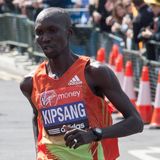
Kipsang won Olympic marathon bronze at London 2012, broke the marathon world record in Berlin in 2013 and won major races in London, New York and Tokyo. His record must also be read alongside his four-year anti-doping whereabouts and tampering ban imposed in 2020. His earlier ratified results remain historically significant.
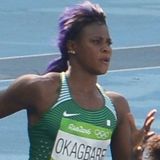
Okagbare earned Olympic long-jump silver at Beijing 2008 and world championship medals in long jump and 200 metres in 2013. She won both Commonwealth sprint titles in 2014. Her career ended under lengthy anti-doping sanctions announced in 2022, which must be distinguished from her earlier results still recognised in official records.
Modise was a prolific forward for Banyana Banyana, becoming the first African footballer to reach 100 senior international goals. She was named player of the tournament at the 2006 African Women's Championship and represented South Africa at the London Olympics, where she scored against Sweden. Her career helped establish women's football in her country.
Montjane became a leading player on the international wheelchair tennis circuit, reaching Grand Slam singles finals and winning multiple major doubles titles. Her partnership with Yui Kamiji produced the 2024 Wimbledon doubles title, adding a grass-court championship to her success at other major tournaments.
Mahlangu won silver in the 200 metres at the Rio Paralympics as a teenager and captured gold in the long jump and 200 metres at Tokyo. His versatility across jumping and sprinting, alongside world championship success, established him as a prominent athlete in international Para athletics.
Chepngetich won the 2019 world marathon championship and ran 2:09:56 in Chicago in 2024, becoming the first woman to complete a marathon in under 2:10. In October 2025 she received a three-year anti-doping ban with results disqualified from 14 March 2025; the 2024 Chicago performance predates that period.
Hayes won consecutive Paralympic long-jump gold medals in Beijing and London, as well as sprint medals across multiple Games. Competing with a visual impairment, she also collected six world titles during her career. Her combination of speed and jumping ability gave her an unusually wide range of international successes.
Anderson reached the US Open final in 2017 and Wimbledon final in 2018, rising to world number five. His powerful serve and improving baseline game helped him compete against the leading players of a particularly strong era in men's tennis. He also represented South Africa in international competition.
Du Plessis was an influential Springbok number eight and captain during the 1970s and early 1980s. His all-round forward play and leadership brought him recognition in the World Rugby Hall of Fame. His later involvement as manager of the 1995 World Cup-winning side followed an accomplished playing career.
Mehta won the Safari Rally five times, including four consecutive victories from 1979 to 1982. His ability to manage punishing roads, mechanical reliability and demanding navigation made him a leading figure in one of world rallying's most difficult events. He helped define Kenya's international motorsport heritage.
Ereng won Olympic 800-metre gold at Seoul in 1988, producing a decisive late surge against a strong field. He went on to win world indoor titles in 1989 and 1991. His success added an important chapter to Kenya's middle-distance tradition between the generations of Keino and Rudisha.
Craven played scrum-half and captained the Springboks during the 1930s, establishing a reputation for passing and tactical intelligence. He became a leading figure in rugby coaching and administration after his playing career. His sporting influence was extensive, although much of it unfolded within South Africa's racially segregated rugby system.
Meyer won Olympic 10,000-metre silver at Barcelona in 1992, South Africa's first Games following its Olympic readmission. She also won the 1994 world half-marathon title and set world bests at that distance. Her career combined high-level track racing with outstanding endurance on the roads.
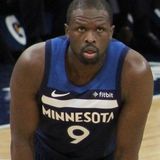
Born in what is now South Sudan, Deng spent part of his childhood in Egypt before moving to Britain. A two-time NBA All-Star, he was valued for his versatile scoring and defence. His subsequent work with South Sudan's basketball federation helped the country's national team qualify for the 2024 Olympics. Origins and affiliation: South Sudan-born; represented Great Britain.
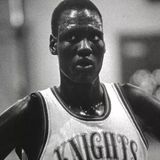
At 7 feet 7 inches, Bol was one of the most imposing shot-blockers in NBA history, leading the league in blocks twice. His remarkable reach and timing made him a distinctive defensive specialist. He used his sporting profile to support humanitarian causes in his homeland and became a pioneering figure for African basketball.
After losing both arms as a child, Hamadtou developed a way to compete in table tennis by holding the racket in his mouth and serving with his foot. He competed at African championships and represented Egypt at the Rio and Tokyo Paralympics. His achievements demonstrate exceptional technical adaptation within competitive sport.
El Ahmar was a prolific left-handed backcourt player for Egypt and a central figure in multiple African handball championship victories. He competed at five Olympic Games and helped Egypt reach the semifinals in Tokyo. His scoring, creativity and longevity made him one of the continent's notable handball players.
Abdel Gawad won the 2016 world squash championship and reached world number one in 2017. His deception, soft hands and ability to construct points from difficult positions distinguished him on the professional tour. He also contributed to Egypt's success in international team competition.
No entries from this region on this list yet.
About this ranking
From Olympic champions and record-breaking runners to football icons, world champion boxers and outstanding competitors across other disciplines, African athletes have shaped the history of sport. Celebrate the performances, careers and legacies that have inspired generations.
Compare the performance first
Start with one performance and what it required. Abebe Bikila won an Olympic marathon barefoot in Rome and repeated the result in Tokyo four years later. In a very different race, Kirsty Coventry won consecutive Olympic 200 metres backstroke titles for Zimbabwe. Both had to return to the same event and win again. At the 2024 Tour de France, Biniam Girmay had to win sprints and earn points across three weeks to take the green jersey. Each record tells you what the athlete could do under the rules of that sport.
Give the role its due
Hakeem Olajuwon won two NBA championships with Houston as a scorer and a defender. Asisat Oshoala’s club and international career made her a six-time CAF Women’s Player of the Year by 2023. Siya Kolisi captained the Springboks to two Rugby World Cups. All were judged partly on what their teams accomplished. Look for the decisions and skills you can attribute to the athlete, and then give the team result its proper weight.
Look across a career
A peak can be very clear. Wayde van Niekerk’s 43.03 in the Rio Olympic final gives you a single lap to assess. Lucy Ejike’s Paralympic powerlifting titles in Athens, Beijing and Rio give you a different kind of evidence, three winning performances across a dozen years. In tennis, Ons Jabeur reached Grand Slam finals on grass and hard courts, while Kgothatso Montjane’s Wimbledon wheelchair doubles title gives you a partnership to evaluate from a match record. The disciplines offer different opportunities for titles. Weigh the difficulty of the performance in its own setting and decide what carries over when making your vote.
This ballot includes athletes born in Africa or who represented an African national side. Where a candidate competed internationally for a different country, their note identifies the affiliation. For a closer comparison inside one discipline, see the football ballot or the distance running ballot.
Think someone is missing from this list?
Suggest an entry and we'll review it for inclusion.