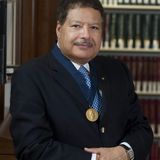
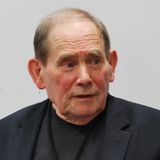
Brenner shared the 2002 Nobel Prize in Physiology or Medicine. His work in molecular biology and the use of a model organism gives readers a case about the research tools and questions that other scientists can build on.
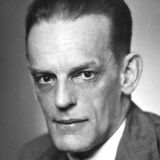
Theiler received the 1951 Nobel Prize in Physiology or Medicine for his work on yellow fever. Consider the relationship between laboratory research and vaccine development, rather than treating the award as a general ranking of every medical achievement.
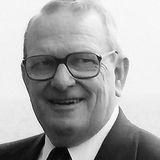
Cormack shared the 1979 Nobel Prize in Physiology or Medicine for work on X-ray computed tomography. His contribution connects physics with medical imaging; it is not a claim that he personally carried out every part of the development of CT.
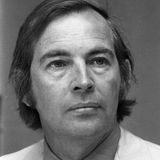
Barnard performed the first human-to-human heart transplant in Cape Town in 1967. The operation is a specific historical milestone. Its place here concerns surgical innovation and its wider significance, rather than a judgement of every part of his career.
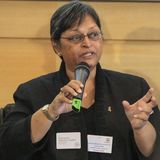
Abdool Karim is an infectious-diseases epidemiologist and a co-founder of CAPRISA. Her HIV research provides a case about prevention research, the design of studies and attention to the people a public-health question affects.
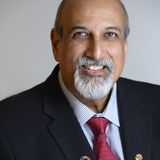
Abdool Karim helped establish CAPRISA and co-led the CAPRISA 004 trial with Quarraisha Abdool Karim. His case involves research leadership and the translation of epidemiological questions into organised studies, without turning a poll result into a scientific conclusion.
Nyokong is a chemist associated with Rhodes University whose research includes light-based approaches studied in relation to cancer treatment. Consider the underlying chemistry and research contribution; a research direction is not by itself proof of clinical effectiveness.
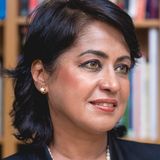
Gurib-Fakim’s scientific work includes biodiversity and the study of medicinal plants. Her scientific record is the case on this page, separate from her later presidency of Mauritius. A plant’s traditional use and evidence for a treatment are different questions.
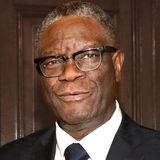
Mukwege founded Panzi Hospital in Bukavu and specialises in the care of survivors of sexual violence. His medical and humanitarian work was recognised with the 2018 Nobel Peace Prize, an award category distinct from the prizes for scientific research.
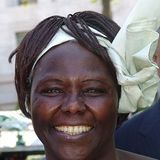
Maathai trained in biology and founded the Green Belt Movement. Her environmental work was recognised with the 2004 Nobel Peace Prize. Her inclusion broadens the comparison to scientific training applied beyond a laboratory, without describing the Peace Prize as a science award.
No entries from this region on this list yet.
About this ranking
Different ways to change a field
This reader ballot compares African scientists and medical pioneers through their work and influence. The candidates include laboratory researchers, a surgeon, epidemiologists and people who applied scientific training in public life. Those are different kinds of contribution. A fair judgement asks what the person actually did and how that work changed the questions, tools or care available to others.
Discoveries and the methods behind them
Ahmed Zewail's femtochemistry, Sydney Brenner's molecular biology and Allan Cormack's work on computed tomography offer different routes into the comparison. A research method can matter because it makes later work possible, even when it is less familiar than a finished technology. Consider both the particular contribution and what other researchers were able to do with it.
The award categories matter. Zewail received the Nobel Prize in Chemistry in 1999; Brenner shared the Physiology or Medicine prize in 2002; Cormack shared that prize in 1979. These facts identify recognised work, but an award is not a formula that settles the order of every career on the page. It also does not make an individual the sole author of every development associated with a field.
Medical milestones and research programmes
Max Theiler's yellow-fever work and Christiaan Barnard's 1967 heart transplant give the medical comparison distinct historical reference points. Quarraisha Abdool Karim and Salim Abdool Karim provide cases centred on HIV research and the organisation of studies. Laboratory findings, a clinical procedure and an epidemiological programme require different forms of evidence; none should be reduced to a competition for the most dramatic headline.
Tebello Nyokong's chemistry and Ameenah Gurib-Fakim's work on biodiversity and medicinal plants broaden the research interests represented. The notes distinguish a research programme from a proven treatment. They also separate Gurib-Fakim's scientific work from her presidency, which belongs to the political ballots.
Beyond a laboratory or an award list
Denis Mukwege's care for survivors of sexual violence and Wangari Maathai's environmental work bring medicine and scientific training into a wider public setting. Both received the Nobel Peace Prize, not a Nobel science prize. Their cases should be assessed on the contribution described, with that distinction kept clear.
This is a reviewed selection rather than an exhaustive register of African scientific achievement. Vote for the work whose importance you can explain, and suggest additional candidates with a specific contribution and supporting evidence. The ballot ranks readers' judgements of historical contribution; it does not establish whether a scientific claim is correct.
Think someone is missing from this list?
Suggest an entry and we'll review it for inclusion.