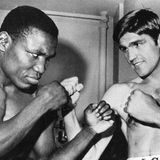
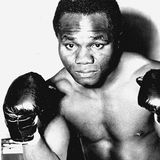
Bassey defeated Chérif Hamia in Paris in 1957 to become world featherweight champion. His case starts with the result that brought Nigeria its first professional world boxing title.
Quartey took the WBA welterweight title from Crisanto España in 1994. His championship bouts give voters a chance to see how much of the contest he could control with his jab.
Mitchell held the WBA junior lightweight championship and later won the IBF title. His record of title defences across several countries makes sustained results central to his case.
Bungu took the IBF junior featherweight title from Kennedy McKinney in 1994 and remained champion through 1999. The length of that reign is the starting point for weighing his work across successive challengers.
Matlala won WBO titles at flyweight and junior flyweight. Those wins give voters evidence in two divisions and several championship fights to consider beyond his small stature.
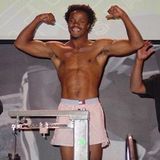
Ouma defeated Verno Phillips by decision in 2004 to win the IBF junior middleweight championship. The twelve-round performance lets voters assess how he sustained his work from the opening bell to the judges’ decision.
Clottey won the vacant IBF welterweight title against Zab Judah in 2008. The judges' scores when the fight stopped in the ninth gave Clottey the title by technical decision.
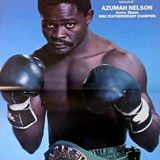
Nelson held the WBC featherweight and super featherweight titles. His second weight class offers a sustained set of defences in which to judge how he adapted to different opponents.
Coetzee defeated Michael Dokes in 1983 to become WBA heavyweight champion. The result gives voters a specific heavyweight title performance to compare with the longer title runs elsewhere on this ballot.
Sanders stopped Wladimir Klitschko in the second round in 2003 and took the WBO heavyweight title. That win makes peak performance against a leading opponent the core of his case.
Thobela defeated Glenn Catley for the WBC super middleweight belt after winning world titles at lightweight earlier in his career. The jump in divisions makes his later title a distinctive part of his record.
Kalambay defeated Mike McCallum on points in Pesaro in 1988 to retain his WBA middleweight title. Born in Lubumbashi and based in Italy, he gives voters a fight against a leading contemporary to examine.
Makabu defeated Michał Cieślak in Kinshasa in 2020 to win the WBC cruiserweight title. The twelve-round decision provides a representative championship bout from his career.
Dogboe won the WBO junior featherweight title in 2018. His title win over Jessie Magdaleno and subsequent defence give voters a short, identifiable stretch of results to assess.
Commey won the IBF lightweight title in 2019. Judge the fights that took him to the belt and the work he was able to do as champion within that division.
Soltani won featherweight bronze in Barcelona and lightweight gold in Atlanta. His results give voters a second Olympic tournament and a different weight class against which to judge the winning run.
Mardi won the over-81 kg title at the 2023 IBA Women’s World Boxing Championships in New Delhi. The draw gives readers a way to trace her route through a world championship tournament.
Ngamba won middleweight bronze at Paris 2024, the first medal for the Refugee Olympic Team. Assess the Cameroon-born boxer through the tournament matches that brought her to the medal rounds.
Zarika won the WBC super bantamweight title in 2016. Her later contests with Catherine Phiri offer a chance to assess what she did to keep that belt against a former world champion.
Phiri took the WBC bantamweight title from Yazmín Rivas in 2016 by technical decision. Her performance before the bout stopped is the evidence to weigh when considering that title win.
Khelif won the women’s 66 kg Olympic title in Paris, defeating Yang Liu in the final. The Olympic draw and judges’ results provide a clear tournament record for assessing the performance.
Wangila won welterweight gold at the Seoul Olympics. His route through the tournament and final against France’s Laurent Boudouani give voters the results on which to judge his Olympic case.
Kalule defeated Masashi Kudo over 15 rounds for the WBA junior middleweight belt in 1979. That match gives voters a case for winning a long championship bout in the opponent’s home country.
Mugabi won Olympic welterweight silver in Moscow and the WBC super welterweight title as a professional in 1989. Both results matter when deciding how his amateur and professional careers fit together.
Kotey defeated Rubén Olivares on points for the WBC featherweight title in 1975. A title win against that opponent gives voters a clear place to start with his record.
Agbeko held the IBF bantamweight title in two separate reigns. His ability to return to the belt after a defeat is a concrete part of his case for a high place on the ballot.
Rwabwogo won Olympic flyweight bronze at Mexico City and silver at Munich. The second tournament gives voters another body of results four years after his first medal.
Bika won the WBC super middleweight belt by decision over Marco Antonio Peribán in 2013. That bout provides a measure of his work against a world-title opponent deep into a contest.
No entries from this region on this list yet.
About this ranking
Begin with an opponent
In 1957 Hogan Bassey beat Chérif Hamia to become world featherweight champion. David Kotey beat Rubén Olivares for the WBC title at the same weight in 1975. The results are a starting point. Find out who was in the other corner, what the opponent had achieved and how the bout was decided. A single title win can carry much more weight when the opposition is clear.
Weigh a title run against a winning peak
Azumah Nelson defended a belt at super featherweight after winning one at featherweight. Dick Tiger’s championship record spans middleweight and light heavyweight. Brian Mitchell and Vuyani Bungu can be judged through repeated defences in their divisions. At heavyweight, Gerrie Coetzee's win over Michael Dokes and Corrie Sanders’s win over Wladimir Klitschko give you specific performances to put beside longer reigns. Give each contest weight for the level of the opponent and what the boxer produced on the night.
Read the tournament draw
An Olympic boxer has to get through a series of bouts in a short period. Robert Wangila won welterweight gold for Kenya in Seoul. Hocine Soltani won medals at two weights across two Games for Algeria. Morocco’s Khadija Mardi took the heavyweight title at the 2023 IBA World Championships. WBC champions Fatuma Zarika and Catherine Phiri offer a professional comparison from East and Southern Africa, including two meetings at super bantamweight. The route to a medal and the work of defending a professional title put different demands on a career.
Judge bouts contested under boxing rules. The ballot covers boxers born in Africa and those who represented an African country as senior amateurs. Where a boxer represented a different team, the candidate note gives that affiliation. You can compare other combat-sport careers on the mixed martial arts ballot.
Read the argument
Think someone is missing from this list?
Suggest an entry and we'll review it for inclusion.