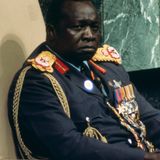
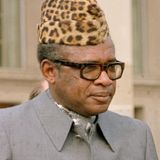
Took power in the 1965 coup and ruled Zaire until 1997. Swiss authorities froze assets held in his name after his death; the scale of extraction from the state during his rule gave rise to the term kleptocracy in general use.
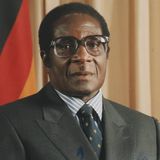
Ruled Zimbabwe 1980–2017. The Catholic Commission for Justice and Peace documented mass killings in Matabeleland in 1983–87; the state Chihambakwe Commission report on the same events has never been published.
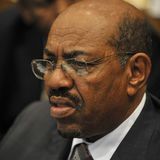
Subject of International Criminal Court arrest warrants issued in 2009 and 2010 for war crimes, crimes against humanity and genocide in Darfur. An arrest warrant records charges; it is not a conviction.
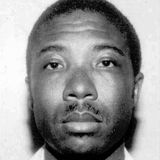
Convicted of aiding and abetting war crimes and crimes against humanity by the Special Court for Sierra Leone in 2012; sentenced to 50 years. The conviction concerned crimes committed in Sierra Leone, not a general judicial verdict on every aspect of his Liberian presidency.
Ruled Nigeria 1993–1998. More than three billion dollars traced to him and his family has since been frozen or repatriated by Switzerland, the United States, Jersey and the United Kingdom under asset-recovery agreements.
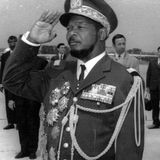
Convicted in 1987 by a Central African Republic court of murder and embezzlement of public funds; sentenced to death, later commuted.
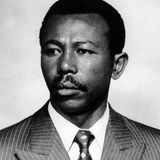
Convicted of genocide in absentia by the Federal High Court of Ethiopia in 2006; sentence increased to death on appeal in 2008.
No entries from this region on this list yet.
About this ranking
An opinion poll anchored to a public record
This ballot asks readers to judge presidential and head-of-state records. It includes military rulers who did not always use the title of president, so the scope is explicit. The order is a reader opinion; the notes beside each candidate describe the documented basis for inclusion. Neither popularity nor an unsupported accusation is enough to add a name.
Read the nature of each record
A conviction, an arrest warrant, an inquiry finding and a documented tenure are different kinds of evidence. Charles Taylor was convicted by the Special Court for Sierra Leone of aiding and abetting crimes committed in Sierra Leone. That is a specific court judgement, not shorthand for an adjudication of every event in Liberia. Omar al-Bashir's International Criminal Court arrest warrants record charges; an arrest warrant is not a conviction.
The entries for Idi Amin, Mobutu Sese Seko, Robert Mugabe and Sani Abacha give their own cited records. Read what each note actually states. A period in office can establish who governed and how power was held without proving every allegation made about that government. Where a commission or court is named, its findings and scope matter more than a dramatic epithet.
Compare responsibility with care
Ask what decisions the leader made, what institutions supported those decisions, and how they affected the public. Harm is not a contest in which an unsourced death toll or a colourful nickname should decide the result. National experiences also differ; a vote should not turn the suffering of people under one government into a device for dismissing another country's history.
This is deliberately a presidents-and-heads-of-state ballot rather than a separate ranking of dictators. The title does not require every candidate to have held the same office or followed the same route to power. The documented record is the basis for participation, and voting supplies the judgement. An uncited candidate must remain outside the public ballot.
Corrections and other comparisons
Use the corrections page to challenge a specific factual statement with evidence. A request should identify the entry, the wording and the relevant record. For a different question, compare the best African presidents or women presidents. Inclusion here is not a substitute for understanding the record or distinguishing an allegation from a judicial finding.
Think someone is missing from this list?
Suggest an entry and we'll review it for inclusion.