Chinua Achebe

Chinua Achebe✓ Verified

"Albert Chinualumogu Achebe"

Literature 🇳🇬 Nigeria Writers
Lifespan 1930 – 2013
Nationality Nigeria
Active 1958 – 2013

Wikipedia ↗ Compare with someone →
2 Rankings
#1 Best rank
150 Top list votes
🇳🇬 Nigeria

Sources and further reading

About

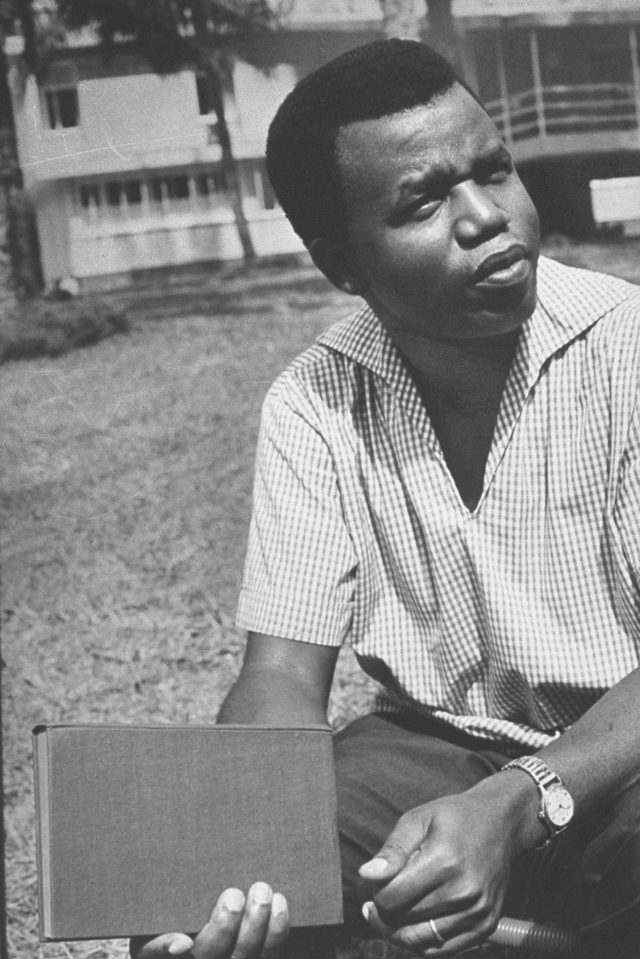
Chinua Achebe was a Nigerian novelist, poet and critic. Things Fall Apart appeared in 1958, followed by No Longer at Ease in 1960 and Arrow of God in 1964. These books are often grouped as his African Trilogy. Later novels include A Man of the People and Anthills of the Savannah. Born in Ogidi, he worked in broadcasting as well as literature. Readers can compare his writing through Nigerian and broader African writer rankings.

Read full biography on Wikipedia ↗

Appears in 2 rankings

Vote on any list below

Want Chinua Achebe on more lists?

Suggest them for any list, or create a new list where they belong.

More from Nigeria

All Nigeria →

Head to head

vs Chinua Achebe vs Abdulrazak Gurnah Which gives an imperial arrival more historical depth, the institutions of an Igbo town or the trade routes a boy is already travelling? 31 votes · Compare the facts → vs Chinua Achebe vs Ama Ata Aidoo Which gives a homecoming greater dramatic tension, a graduate entering the civil service or a couple entering a family with different expectations? 25 votes · Compare the facts → vs Chinua Achebe vs Assia Djebar Which changes how you read the colonial account more decisively, a last-page reduction of a man’s life or a sustained confrontation with the archive? 8 votes · Compare the facts → vs Chinua Achebe vs Ben Okri Which use of spiritual experience changes your understanding of public life more, shared practices in Umuofia or the uncertain authority of Azaro’s vision? 26 votes · Compare the facts → vs B Chinua Achebe vs Buchi Emecheta Which does more to clarify the economics of family expectation, a civil servant owing his community a return on education or a mother expecting security in old age? 31 votes · Compare the facts → vs Chinua Achebe vs Chimamanda Ngozi Adichie Which makes a turning point in Nigerian history more readable, the formation of colonial authority in Umuofia or a war experienced through several interdependent lives? 5 votes · Compare the facts → vs Chinua Achebe vs Damon Galgut Which makes a family’s changing place in history clearer, a central figure losing standing in his community or a household avoiding a promise through successive funerals? 23 votes · Compare the facts → vs Chinua Achebe vs J. M. Coetzee Which portrayal of colonial administration makes its power easier to examine, a named community dealing with it or an unnamed empire exposing its own methods? 21 votes · Compare the facts → vs Chinua Achebe vs Mariama Bâ Which use of social expectation gives you more room to judge the characters, a community narrated from several positions or one widow’s account to a friend? 6 votes · Compare the facts → vs Chinua Achebe vs Nadine Gordimer Which makes a shift in power easier to feel, an authority taking hold of familiar institutions or a household suddenly dependent on someone it once employed? 16 votes · Compare the facts → vs Chinua Achebe vs Naguib Mahfouz Which use of a family makes a historical upheaval more legible, Okonkwo’s standing in an Igbo community or the Al Jawad household in Cairo? 30 votes · Compare the facts → vs Chinua Achebe vs Ngũgĩ wa Thiong’o Which moment reveals more about collective judgement, a community approaching colonial rule or an independence celebration that brings unresolved memories to light? 6 votes · Compare the facts → vs Chinua Achebe vs Nuruddin Farah Which more convincingly splits a character’s loyalties, Ezeulu’s competing sources of authority or Askar’s divided sense of kinship? 28 votes · Compare the facts → vs Chinua Achebe vs Tsitsi Dangarembga Which puts more pressure on the promise of schooling, the graduate’s return to a civil-service career or the girl working to gain entry? 19 votes · Compare the facts → vs Chinua Achebe vs Wole Soyinka Which literary form more powerfully reveals the pressure of communal obligation: Achebe’s novel or Soyinka’s play? 26 votes · Compare the facts →

People also voted on