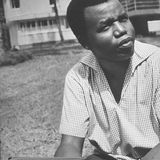
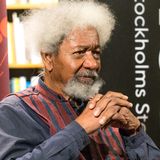
The preparations for a funeral in Death and the King’s Horseman become a contest over who has the authority to intervene.

Half of a Yellow Sun follows several people through the Biafran War, allowing loyalties forged at home to collide with public events.

A Grain of Wheat approaches Kenyan independence through village secrets and the trouble of agreeing who should be remembered as a hero.
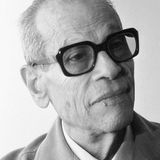
Start with Palace Walk, where the demands of a Cairo household give the political and social conflicts outside it a domestic scale.
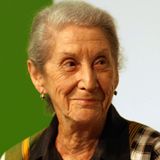
July’s People asks what happens to the habits of a white family when it comes to depend on its former servant for safety.

Disgrace carries a Cape Town professor’s collapse into his daughter’s rural life, where his sense of what he is entitled to decide is tested again.

The Famished Road lets Azaro move between spirit and material worlds, with hunger and neighbourhood politics pressing on both.

In Paradise, the young Yusuf learns the obligations behind the apparent freedom of a merchant’s journey through East Africa.
The Joys of Motherhood follows Nnu Ego as the work of raising children comes into conflict with the rewards she was taught to expect.
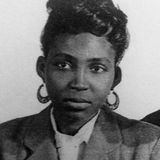
The letter in So Long a Letter lets Ramatoulaye shift between grief, anger and the practical questions of life after her husband’s death.
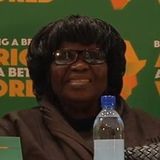
Changes follows Esi through divorce and a new marriage in Accra, testing how much independence either decision gives her.
In A Question of Power, Elizabeth’s struggle to make a life in Botswana takes place alongside a crisis of perception.

The education Tambu seeks in Nervous Conditions promises room to grow and gives her the tools to see who pays for that opportunity.
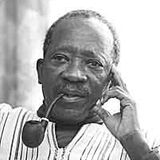
God’s Bits of Wood builds a railway strike through several places and households, making collective action a matter of daily choices.
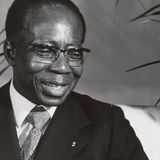
Chants d’ombre is a starting point for the Senegalese poet’s use of memory, address and place in French-language verse.
Fantasia places the history of the French conquest of Algeria alongside women’s voices and memories of learning to write.

In Broken Glass, the stories collected by a bar regular spill into one another through the momentum of his telling.
The Palm-Wine Drinkard sends its thirsty traveller on a succession of strange encounters. The pace and idiom are part of the adventure.
Jagua Nana follows a woman making her way through Lagos, with her choices and obligations keeping the city in view.
Efuru gives commerce, friendship and spiritual life real weight in the story of a woman navigating marriage and motherhood.

Maps makes the argument over the Ogaden intimate through Askar’s questions about kinship and who gets to claim him.
In Season of Migration to the North, the narrator’s homecoming becomes entangled with Mustafa Sa’eed’s account of his years abroad.
The Dark Child evokes a Guinean childhood through the textures of family life and the prospect of an education away from home.
The Beautyful Ones Are Not Yet Born follows a man trying to live honestly while everyday offers of advantage wear down that resolve.

The Shadow King centres women caught up in the Italian invasion of Ethiopia and asks who gets pictured as a participant in war.

We Need New Names follows Darling from Zimbabwe to America and keeps childhood friendship in view as the meaning of home changes.
In The Book of Memory, a woman on death row reconstructs a life that others have already tried to explain and judge.
The Promise returns to one family through successive funerals, measuring the distance between an undertaking and its fulfilment.
Ways of Dying gives a professional mourner the task of finding ways to live among the losses he is paid to mark.
Down 2nd Avenue uses the details of a South African childhood and education to put a lived voice against the boundaries imposed by race.
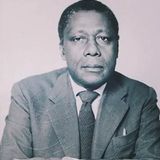
Mission to Kala follows a young man sent to recover another man’s wife, an errand that exposes the gap between his schooling and local knowledge.
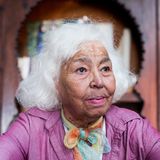
Woman at Point Zero lets Firdaus describe her life before her execution, bringing the question of who can speak for her into the narrative itself.
Sozaboy follows a young recruit into war in a voice whose shifting English is part of the story of what he learns.
Start with Labyrinths, where patterns of invocation and recurring images reward reading the poems together and aloud.
Song of Lawino gives its speaker the time and rhetorical space to take apart her husband’s judgement of her ways of life.
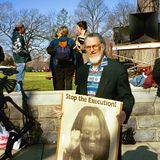
Letters to Martha brings the form of a letter into poems about prison, making its rhythms of waiting and separation personal.

The Promise of Hope offers a route into Awoonor’s poetry across decades, including his work with elegy and remembrance.
The Marriage of Anansewa brings the Ananse storytelling tradition into theatre, making a marriage scheme something the audience can watch being invented.
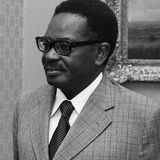
Sacred Hope offers a reading of Angola through poems of separation and collective endurance, alongside Neto’s better-known public career.

Nothing but the Truth begins with brothers and a funeral, giving an argument about exile and remembrance immediate stakes for one family.

Eclipsed keeps its attention on women negotiating survival during Liberia’s civil war, putting the choices available inside their shelter at the centre of the play.
No entries from this region on this list yet.
About this ranking
A novel can unsettle the version of events a reader inherited. In A Grain of Wheat, independence is the occasion for a reckoning with loyalties formed under colonial rule. In Season of Migration to the North, a return to Sudan opens a story that keeps travelling between two countries and two accounts of the past.
The ballot puts spoken voices next to prose. Okot p’Bitek gives Lawino room to argue in a long poem, while Efua Sutherland uses an audience’s appetite for a good story to drive The Marriage of Anansewa. On stage, a pause or an interruption can be as consequential as an episode in a novel.
Read an author in translation where you can, and be alert to what you are hearing from the translator as well as the writer. A Nobel citation or a prize shortlist can help you choose a starting point. The vote is about what the work does: which voice keeps returning to you, which character changes your reading of an earlier scene, and which writer you want to follow into a second book.
Read the argument
Think someone is missing from this list?
Suggest an entry and we'll review it for inclusion.