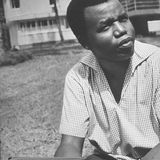
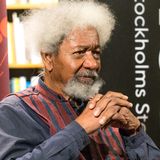
Death and the King’s Horseman makes a funeral an event over which several people claim authority. Read the changes in pace as readily as the arguments themselves.

Half of a Yellow Sun puts private loyalties through the Biafran War. Try tracing how shifts of viewpoint change the meaning of the same kind of decision.
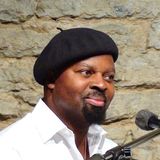
In The Famished Road, the space between a neighbourhood and the spirit world stretches a single boy’s account without letting everyday hunger disappear.
The Joys of Motherhood follows what Nnu Ego is asked to give and when she can expect help in return. The accounting in the household becomes part of the novel’s form.
In The Palm-Wine Drinkard, one encounter can seem to turn into the next through the delight and speed of the storyteller’s voice.
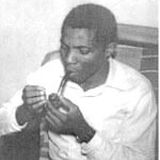
Labyrinths rewards following a recurring image across more than one poem. Read how the sounds change as different voices seem to be invoked.
On a first reading of Jagua Nana, follow how city connections change the options open to the woman at the centre of the book.
Efuru gives commerce and women’s social lives a narrative weight that can be felt in the decisions the main character makes about marriage.
Sozaboy gives its young recruit a way of speaking through which readers can hear his uncertainty, even before his grasp of the war begins to change.
No entries from this region on this list yet.
About this ranking
The centre of a Nigerian novel can be a household, a village, a business or a city already changing around its characters. Things Fall Apart gives Okonkwo’s community the time to establish its own disagreements. For Ekwensi’s Jagua Nana, Lagos keeps putting the central character into new kinds of company.
A different set of choices is audible in the language. The Palm-Wine Drinkard drives an adventure through the speed and invention of its telling. Sozaboy changes our understanding of its young soldier through the English in which he has to make sense of war. Read a page aloud and hear what the syntax is carrying before the next event arrives.
The ballot includes a dramatist and a poet because their work can set a different test for the reader. In Death and the King’s Horseman an exchange can change who has the appearance of authority. Labyrinths can make a recurring image stronger by sending it into another poem. Ask which writer gives you a reason to return to a whole work.
Think someone is missing from this list?
Suggest an entry and we'll review it for inclusion.