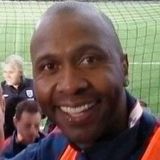
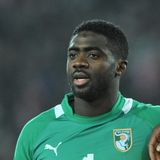
Touré played centre-back in Arsenal’s unbeaten league season and later helped Côte d’Ivoire win the Africa Cup of Nations. His club record shows how he covered space and recovered when the team pushed forward.
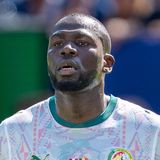
Koulibaly captained Senegal at its first Africa Cup of Nations triumph. Watch what his organisation and positioning contribute when an opponent makes the back line retreat toward goal.
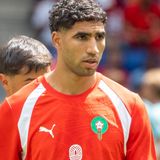
Hakimi played right-back during Morocco’s run to the 2022 World Cup semifinals. His recovery runs and ability to turn defence into an attack are parts of the same job.
Song played 137 times for Cameroon and was in the back line of its back-to-back Africa Cup of Nations victories in 2000 and 2002. The repeated international selection gives you many different opponents through which to assess his game.
Yobo represented Nigeria for more than a decade and captained its 2013 Africa Cup of Nations winners. Start with his ability to organise and clear danger over a sequence of matches before weighing any one result.
West won Olympic gold with Nigeria in 1996 and the UEFA Cup with Inter in 1998. Those two winning sides give voters ways to compare how he handled duels and space in different settings.
Mokoena reached 100 caps and captained South Africa at its home World Cup in 2010. That international record gives voters a long defensive career to compare through different campaigns and coaches.
Kuffour made 175 Bundesliga appearances and won the Champions League with Bayern in 2001. Consider how his timing as a central defender mattered in league matches as well as on a European final night.
Gomaa won six CAF Champions League titles with Al Ahly and was in Egypt’s side for three successive Africa Cup of Nations wins. His career supplies repeated high-level performances to assess in defence for club and country.
Naybet was a defender for Deportivo during its 1999–2000 Spanish title season. His years in Spain give voters a body of club work to weigh alongside his long international career with Morocco.
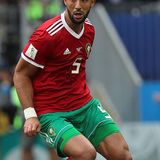
Benatia led Morocco at the 2018 World Cup and played at centre-back for clubs including Juventus and Bayern. Compare how he protected the box across a club season with the same decisions in short international tournaments.
Saïss captained Morocco as it reached the 2022 World Cup semifinals. Look at how the centre-back and those around him defended the space between midfield and goal when opponents had prolonged possession.
Jaïdi won the 2004 Africa Cup of Nations with Tunisia after a long spell at Espérance. His move to Bolton gives voters a second setting in which to assess his work as a centre-back.
Keshi played in defence for Nigeria and spent several seasons with Anderlecht. His ballot case rests on his playing role, including the Africa Cup of Nations-winning era, with his later coaching record providing career context.
Okechukwu was part of Nigeria’s 1996 Olympic gold-winning back line. The knockout rounds give voters matches in which to judge how he dealt with the spaces opened by Nigeria’s attacking play.
Troost-Ekong was named best player of the 2023 AFCON as Nigeria reached the final. Look at his command of the line and decisions near goal alongside the goals he added himself.
Fish helped South Africa win the 1996 Africa Cup of Nations. His club spells in South Africa and Europe give voters more settings in which to judge the centre-back behind that title.
Tovey captained South Africa to its 1996 Africa Cup of Nations title. The home tournament gives a defined set of games in which to look at how a defensive leader kept the team organised.
Mandi started the 2019 Africa Cup of Nations final, when Algeria shut out Senegal. Compare his work protecting the lead in that match with the responsibilities he took on over a longer international career.
Bensebaini won the 2019 Africa Cup of Nations with Algeria and played at centre-back and left-back in club football. His case includes the defensive decisions those roles share and those that change near the touchline.
Bougherra captained Algeria at the 2014 World Cup. His tournament gives voters an opportunity to compare a central defender’s decision to step out and challenge with protecting the space behind him.
Tapsoba played in Bayer Leverkusen’s unbeaten 2023–24 league campaign. His work for Burkina Faso gives a different defensive assignment to compare with a club side used to playing high up the field.
Koné helped Burkina Faso reach the 2013 Africa Cup of Nations final and played in Ligue 1 with Lyon. His case includes organising a defence through a continental knockout run.
Mbemba scored against Guinea as the Democratic Republic of the Congo advanced to the 2023 Africa Cup of Nations semifinals. Give the chance he took at a set piece its place alongside his central work in defence.
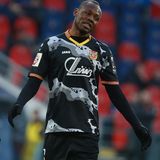
Sunzu took the decisive shootout penalty when Zambia beat Côte d’Ivoire in the 2012 Africa Cup of Nations final. His defensive work through the scoreless match belongs in the same assessment.
Kirunda captained Uganda to the 1978 Africa Cup of Nations final. That run gives voters a place to start with the leadership and anticipation he brought to a team reaching its first final.
Tataw captained Cameroon in its run to the quarter-finals of the 1990 World Cup. The tournament gives voters a documented place to examine a captain’s work as a right-back in a side that upset established teams.
Lauren was part of Arsenal’s unbeaten league defence in 2003–04. Those matches show the adjustments a right-back makes between a game’s defensive and attacking phases.
Ebi appeared at her sixth World Cup in 2023. That span gives voters matches from several generations of Nigerian teams in which to assess her decisions and leadership at centre-back.
Ohale scored in Nigeria’s 3–2 win over Australia at the 2023 Women’s World Cup. See what her positioning and close marking did in the same match after the goal.
Van Wyk reached 185 senior caps for South Africa and captained Banyana Banyana during a long international career. Her playing record gives voters opportunities to judge her across multiple cycles of the national team.
Mbane made CAF’s Best XI when South Africa won the 2022 Women’s Africa Cup of Nations. Her work at centre-back gives voters an example of the decisions behind a title-winning defensive record.
Benzina started in Morocco’s 1–0 win over South Korea at the 2023 Women’s World Cup. The clean sheet gives voters one complete game in which to watch her management of space in the penalty area.
Mweemba scored Zambia’s first Women’s World Cup goal in its 2023 win over Costa Rica. That match gives a starting point for judging what she brought to Zambia’s defence and on set pieces.
Alozie scored a late winner against South Africa in the 2024 Women’s Africa Cup of Nations semifinal, played in 2025. Her matches as a full-back let voters assess how frequently she makes chances from a defensive position.
Desailly won the World Cup with France after being born in Accra. His work at centre-back for France and Chelsea gives voters a substantial defensive record across national and club teams.
Umtiti scored the only goal in the 2018 World Cup semifinal against Belgium while playing centre-back for France. The Cameroon-born defender’s work without the ball was also part of holding Belgium scoreless.
Evra was born in Dakar, represented France and won the 2008 Champions League with Manchester United. His club record gives voters matches in which to observe how a left-back handled wide attackers and supported his own winger.
Boli scored the only goal for Marseille in the 1993 Champions League final against Milan. Born in Abidjan, he represented France. Assess his ability to defend a narrow lead in the same match as that winning header.
Aurier won Africa Cup of Nations titles in 2015 and 2023, eight tournament years apart. His sustained work as a right-back lets voters compare defensive recovery and forward support across more than one cycle.
Eboué started the 2006 Champions League final as Arsenal’s right-back. That match gives voters a chance to see his role when an attacking full-back has to spend long periods protecting his own goal.
Matip made 194 league appearances for Schalke and later won the Champions League with Liverpool. See how his first pass and ability to advance with possession complemented his work stopping attacks.
No entries from this region on this list yet.
About this ranking
Look before the tackle
Wael Gomaa won six CAF Champions League titles with Al Ahly. Lucas Radebe won an African title with South Africa and captained Leeds. Look for what those centre-backs did before a tackle became necessary. The position of the next defender and the first movement toward an attacker can tell you as much about a team’s control as a clearance on the line.
Compare jobs along the back line
Achraf Hakimi’s running at right-back creates different responsibilities from those of Romain Saïss in central defence. Both worked in the Morocco side that reached the 2022 World Cup semifinals. In the 2023 Women’s World Cup, Nouhaila Benzina started in Morocco’s first win and Osinachi Ohale helped Nigeria beat Australia. Onome Ebi’s six editions of the tournament and Janine van Wyk’s 185 caps give voters careers to consider over several cycles of a national team.
Let the whole match count
Stoppila Sunzu took the winning penalty in Zambia’s 2012 Africa Cup of Nations final. Basile Boli scored the only goal in Marseille’s 1993 Champions League final. Both also defended through finals with very little margin for error. Consider the whole match before giving an attacking moment too much power over a vote for a defender. William Troost-Ekong’s player-of-the-tournament award from the 2023 Africa Cup of Nations offers a place to look at defensive work across more than one match.
The ballot covers footballers who played sustained senior club or national-team minutes in a defensive position. It includes players born in Africa and players who represented a senior African side, with other affiliations identified in the notes. See the general football ballot or the women’s football ballot to compare players across positions.
Think someone is missing from this list?
Suggest an entry and we'll review it for inclusion.