

Weah could turn a deep reception into his own scoring opportunity. Milan’s league archive provides a setting for assessing how his carrying changes the problem for the last defender.
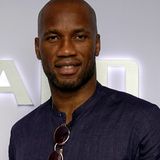
Drogba scored 104 Premier League goals. His work with a defender tight behind him gave Chelsea a way to keep possession and join him before the next attack.

Milla’s Cameroon World Cup goals show what timing can do when a forward enters late. Judge the decisions he makes before defenders have settled around him.
Yekini scored Nigeria’s first World Cup goal in 1994. Use the finish as one example of a centre-forward arriving where the pass can reach him in front of goal.

Gyan’s six World Cup goals give a defined set of matches to assess his runs and finishing. Follow how he finds space when a defence has time to get set.

Kanu’s 1999 hat-trick at Chelsea gives three ways to finish from the same afternoon. His composure makes more sense beside the work he did connecting midfield to attack.

Osimhen scored 26 league goals in Napoli’s 2022–23 title campaign. Follow the early run behind the centre-back and the decisions he forces the goalkeeper to make.

Adebayor scored 97 Premier League goals. Watch how his height gives him a first reception and how quickly he can put himself back in a position to finish.

Aubameyang shared the 2018–19 Premier League Golden Boot and also scored heavily at Saint-Étienne. His timing behind the last line is a useful point of comparison across leagues.

Kanouté’s Sevilla years provide a long test of his hold-up play and finishing. Watch where he stands while another attacker moves through, and how he arrives for the return pass.

McCarthy’s club career gives him several settings in which to assess a centre-forward’s finishing. Follow the movement he uses to buy time just before striking the ball.

Hassan’s work for Egypt gives a lengthy international centre-forward case. Consider his movement close to goal under several tournament conditions.
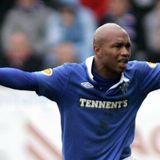
Diouf’s work up front for Senegal at the 2002 World Cup offers a case for disruption and chance creation. Look at the defenders he draws out before the play reaches the box.

Salah’s scoring from nominally wide positions gives voters a comparison with central strikers. Follow which runs put him on the end of moves he began outside the area.
Keita scored 42 French league goals in 1970–71 for Saint-Étienne. The longer club record gives voters context for a scoring peak of unusual scale.
Akesbi scored 173 goals in France’s top flight. His record across different clubs provides a sustained centre-forward case from an earlier era.
Niang scored 100 French top-flight goals and led the scoring table in Marseille’s 2009–10 title season. Compare his sustained output with the particular value of that peak.
Yakubu’s 95 Premier League goals give a long comparison across clubs. Watch his timing when a chance is likely to arrive from a second ball.
No entries from this region on this list yet.
About this ranking
Samuel Eto’o, Didier Drogba and Victor Osimhen offer three ways to lead an attack. One forward can arrive before the defender sees the pass, another can win a long ball that gives his side time, and a third can make the same run behind until an opening appears.
Career totals need context. Consider the role a club gives a forward, then look at the matches where a national team asks him to play differently. Asamoah Gyan and Rashidi Yekini give the ballot centre-forward cases grounded in World Cup play as well as club football.
The scoring wide forward belongs where scoring is a major part of the job. Give the runs away from the ball and the passes that help somebody else score the same attention as the finish. Then decide how much to value a dominant season against a career of repeat contributions.
Think someone is missing from this list?
Suggest an entry and we'll review it for inclusion.