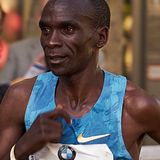
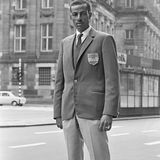
Bikila won the Rome marathon barefoot in 1960 and defended the Olympic title in Tokyo in 1964. The wins on two courses and four years apart make the case for more than one extraordinary race.
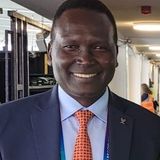
Tergat won Berlin in 2003 in 2:04:55, a world record at the time. The close finish offers a way to judge what he had left after running at that pace.
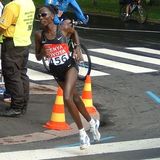
Ndereba won the 2003 and 2007 world marathons and took Olympic silver in Athens and Beijing. Her case is the ability to return to the front over several championship cycles.
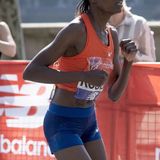
Kosgei ran 2:14:04 to set a then-world record in Chicago in 2019 and finished second at the Tokyo Games. The two performances show elite speed on a fast course and medal-winning execution in a championship.
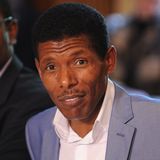
Gebrselassie ran 2:03:59 in Berlin in 2008. Follow his pacing over the full course to see how a runner with a track background converted speed into a marathon record.

Tulu won the 2009 New York City Marathon. Use that win on a course with bridges and hills as the basis for judging her at this distance.
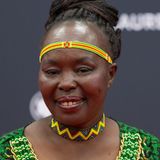
Loroupe won New York in 1994 and 1995 and later broke the world record in Berlin. Those performances take her case from a crowded city race to one of the fastest courses.
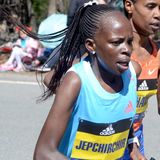
Jepchirchir took Olympic gold in Sapporo and won the New York City Marathon in 2021. The varied courses and short gap between the races give her the case for adaptability.
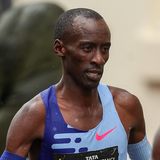
Kiptum clocked 2:00:35 in Chicago in 2023. That record and his London win show how high his peak reached in a short marathon career.
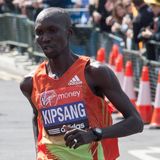
Kipsang took Olympic bronze in London and set a then-world record of 2:03:23 in Berlin the following year. Those races reward a look at both his placing and his pace.
Wami’s Berlin marathon work gives voters a road-racing case distinct from her track medals. Her 2007 Berlin time places her among the strongest marathon performers of that season.
Keitany’s 2:17:01 in London in 2017 broke the women-only benchmark. Assess how she sustains the early pace, using the race category when comparing the time.
Jeptoo won Olympic silver on the London course in 2012, then won London and New York in 2013. Her late-race strength travelled well between the two courses.
Roba won Olympic marathon gold in Atlanta in 1996. The championship result gives her a distinct case in an era when the event was still relatively new on the women’s Olympic programme.
Tola won Paris 2024 in an Olympic record of 2:06:26. His management of a course with demanding climbs makes this a performance worth judging alongside record runs on flatter roads.
Assefa ran 2:11:53 at Berlin in 2023, a ratified world record at the time. Her performance shows how much time an athlete can find by maintaining an ambitious pace through the second half.

Bekele won Berlin in 2:01:41 in 2019. The official result provides a stand-alone marathon case when judging an athlete whose track achievements are already well known.
No entries from this region on this list yet.
About this ranking
Abebe Bikila and Eliud Kipchoge each won consecutive Olympic marathons. The courses, fields and eras were different, but both had to produce a winning effort on the day the championship asked for it. Fatuma Roba’s Atlanta gold and Catherine Ndereba’s record of reaching the podium in four Olympic and world championship marathons give that measure of greatness more depth.
A fast city marathon supplies a different test. Paul Tergat and Haile Gebrselassie pushed the benchmark in Berlin, while Brigid Kosgei and Kelvin Kiptum set world records in Chicago. When judging those performances, consider pacing, weather, the course and the field. A time run in a women-only field belongs in that category, as Mary Keitany’s 2017 London mark illustrates.
Winning repeatedly across different courses can carry as much weight as one exceptional time. Tegla Loroupe won twice in New York, and Peres Jepchirchir won the Olympic marathon and New York in the same year. Compare how a runner handles the moves of the field and the last kilometres, then decide how much you value a short peak against years of repeat performances.
Think someone is missing from this list?
Suggest an entry and we'll review it for inclusion.