Gebrselassie won Olympic 10,000 metres titles in Atlanta and Sydney. Compare how he arrived at a winning position late in two finals against the strongest field the Games brought together.

The Athens 10,000 metres title and the Beijing 5,000 and 10,000 metres double put Bekele’s finishing speed in three Olympic finals. Assess what changes when he has to repeat the effort over two distances at one Games.
Kipchoge won the marathon in Rio and at the Tokyo Games, with Olympic 5,000 metres medals earlier in his career. The two distances show the different tactical work behind his Olympic record.
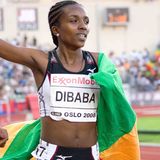
Dibaba won both long track races in Beijing and retained the 10,000 metres title in London. Give the range of the double and the repeat title their own weight.

Tulu won the 10,000 metres in Barcelona and again eight years later in Sydney. The gap between titles makes her return to the front in the same event especially instructive.
Kipyegon won three consecutive Olympic 1,500 metres finals through Paris 2024. Watch how she protects her position before committing to the decisive part of the race.
Rudisha led the London 800 metres final through his own world-record pace and took another gold in Rio. The contrast in how each final unfolded gives his Olympic record depth.
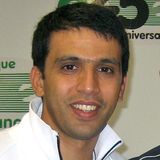
El Guerrouj won the 1,500 and 5,000 metres at Athens 2004. Compare the decisions he makes about position and timing across the two different finals.

Van Niekerk won the Rio 400 metres in 43.03 from lane eight. The outside draw made it a test of judging his own effort before seeing how the rest of the field was moving.
Mutola’s gold in the 800 metres at Sydney followed bronze at Atlanta. Her Olympic case is the ability to find a route through a race where position changes quickly.
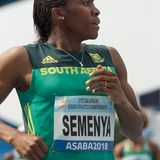
Semenya is credited with the London and Rio Olympic 800 metres titles. Consider the racing decisions over two laps and the ability to reproduce a winning result four years later.
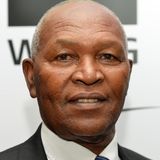
Keino won Olympic gold in the 1,500 metres at Mexico City and in the steeplechase at Munich. Use both finals to judge his range across races with different demands.
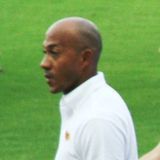
Fredericks took silver in both Olympic sprints at Barcelona and did it again at Atlanta. The four performances are a way to compare consistency across distances and Games.
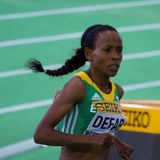
Defar won the 5,000 metres in Athens and London. Her ability to find a winning finish eight years apart gives the second gold a different kind of value from the first.
Wami took 10,000 metres silver and 5,000 metres bronze at Sydney. Look at what she had left at the finish of the shorter event after racing against much the same generation of runners.
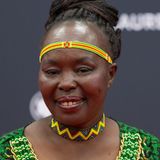
World Athletics records Loroupe as an Olympic top-eight finisher. Judge her Olympic track result in its own right, using her marathon record as background to the change in racing distance.
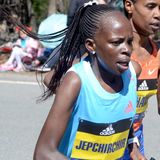
Jepchirchir won the Tokyo Olympic marathon, staged in Sapporo. Consider how she moved from running in the field to managing the closing kilometres in a race decided by place.
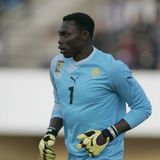
Kameni kept goal for Cameroon’s Olympic gold medallists at Sydney. His saves in the final give voters a specific contribution to assess before the match moved to penalties.

Le Clos out-touched Michael Phelps in the London 200 metres butterfly in 1:52.96. The last length gives an unusually clear look at how he preserved enough speed for the finish.
Smith won the 200 metres breaststroke at Tokyo and the 100 metres at Paris. The two finals allow a comparison of pacing in the longer race and speed over the shorter one.
Yego earned Rio javelin silver. Compare how well he converted his run-up and release into a medal throw in an event where a final can turn on a single attempt.
Kemboi won the steeplechase at Athens and London. Judge how he preserved his rhythm over the barriers before using speed when the field began to split.
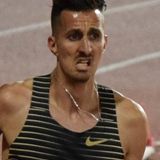
El Bakkali defended his Tokyo steeplechase title in Paris. Judge the moment he moved through the field in each final and how well he handled the barriers when the pace lifted.
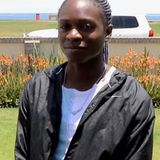
Mboma took Olympic 200 metres silver at Tokyo. Focus on how much ground she made in the closing straight and the speed she still had after the bend.
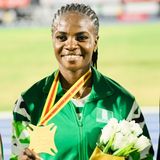
Amusan finished fourth in the Tokyo Olympic 100 metres hurdles. Judge that final through the closeness of the race and the technique she maintained while sprinting between barriers.

Coventry won Olympic 200 metres backstroke gold at Athens and Beijing, part of a seven-medal career for Zimbabwe. Her podiums in other events give a second measure of her range.

Heyns won both breaststroke finals in Atlanta and added 100 metres bronze in Sydney. Compare how she controls pace through the 200 with the greater urgency of the shorter race.
Chebet won Kenya’s first Olympic women’s 10,000 metres title in Paris and took the 5,000 metres at the same Games. Her finishing decisions in the two finals give the double its substance.
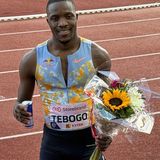
Tebogo won the Olympic 200 metres in Paris. The bend and transition to the straight give voters a close look at the run that made him Olympic champion.
Cheptegei added the Paris 10,000 metres title to his Tokyo 5,000 metres gold. Judge the range needed to win Olympic finals over both distances.
Ghribi is credited with Olympic 3,000 metres steeplechase gold at London 2012. Judge the way she had to maintain her closing pace while still negotiating the barriers.
Niyonsaba won Olympic 800 metres silver in Rio. The race gives Burundi a distinct medal case and voters a tight two-lap final to examine.
Roba won the 1996 Olympic marathon at Atlanta. The result gives her a championship case in its own right across a demanding city course.
No entries from this region on this list yet.
About this ranking
A repeat champion makes one kind of case. Faith Kipyegon won the Olympic 1,500 metres at Rio, Tokyo and Paris. Abebe Bikila retained the marathon title in Tokyo four years after winning in Rome. The results show what returning champions have to do when the course, opponents and pace are different.
The same Games can contain more than one convincing performance. Hicham El Guerrouj won the 1,500 and 5,000 metres in Athens, and Penny Heyns won both breaststroke events in Atlanta. Compare the different demands of the two events before counting the medals. Kirsty Coventry’s seven-medal record gives voters a longer set of Games to consider, with gold in the 200 metres backstroke at two of them.
Some of the clearest cases come from a single final. Watch David Rudisha set the pace in the London 800 metres and Wayde van Niekerk run from lane eight in Rio. In team events, focus on the part the athlete played in the result. Carlos Kameni’s saves for Cameroon in Sydney give the football case a specific match to examine. Give outstanding finalists and team contributors the same close attention as the athletes with the largest medal totals.
Think someone is missing from this list?
Suggest an entry and we'll review it for inclusion.