Won the Olympic 1,500 metres and later the steeplechase. Compare the sustained front-running in one final with the way he manages the obstacles in the other.
Five successive senior world cross-country titles tell a different story from his two Olympic 10,000 metres silvers. Watch how he judges the ground and opponents in each form.
The 1:40.91 at London 2012 is worth watching from the gun. Rudisha’s defence of the title four years later gives his peak a second test.
Three consecutive Olympic 1,500 metres titles invite a comparison of the precise moments Kipyegon decides to move in each final.
Two world marathon golds and two Olympic silvers give Ndereba a case based on returning to the podium across four championship courses.
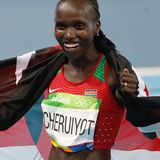
Silver over 10,000 metres in Rio was followed by 5,000 metres gold. Watch how Cheruiyot changes where she spends her effort from the first final to the second.
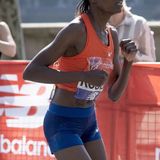
The 2:14:04 in Chicago in 2019 was a world record at the time. Her Sapporo Olympic silver gives the vote a comparison through a race with a different priority.
The 9.77 in Nairobi is Omanyala’s fastest 100 metres. Add the rounds at the 2022 Commonwealth Games to judge what he could repeat during a championship.
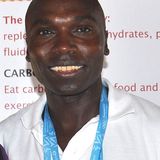
Born in Kenya, Kipketer won three world outdoor 800 metres titles for Denmark. Keep that team affiliation in view when comparing how he controlled speed through two laps.
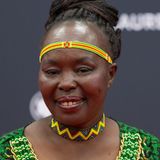
Her successive New York wins and 2:20:43 in Berlin give Loroupe a case built on two very different ways a marathon can reward the same athlete.
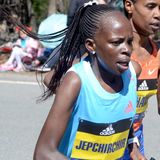
Won the Olympic marathon in Sapporo and New York in the same year. Put her decisions over each course side by side rather than treating the victories as interchangeable.
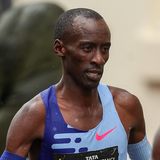
The 2:00:35 Chicago record came in a short career with few elite marathon starts. Compare its pacing with his London win when judging the size of that peak.
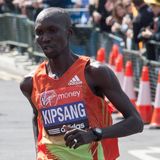
Won Olympic bronze in London and ran 2:03:23 in Berlin the next year. The results show what a championship placing and a then-world record each add to his case.
Winning both long track races at Paris 2024 required Chebet to finish differently against different fields. Compare the last lap in each final.
Won twice at the Olympics and four times in a row at the World Championships. The record lets voters watch how he varied the finish of the same steeplechase distance.
Threw 92.72 metres for the 2015 world javelin title. His Rio silver provides a second championship on which to assess his timing and delivery.
Ran 2:17:01 in the women’s-only London Marathon in 2017. That performance is easiest to evaluate by comparing results under the same racing format.
Two outdoor world 5,000 metres titles sit beside a Paris Olympic marathon bronze. It is a case for handling the changes of pace demanded by two different surfaces and distances.
The closing stages of the 2009 world 10,000 metres show Masai still in a position to react when the race starts to split. The title gives her a clear championship case.
Ngeny’s Olympic win over Hicham El Guerrouj in Sydney comes down to an attack carried all the way through the last straight.
The 2007 world title and 2008 Olympic gold give Kipruto successive seasons of steeplechase evidence. Follow his position going into the final barriers in both races.
Olympic silver in London and 2013 wins in London and New York show how quickly Jeptoo could adjust a marathon plan across different courses.
No entries from this region on this list yet.
About this ranking
David Rudisha’s 2012 Olympic 800 metres works as a lesson in making other runners respond to your pace. Noah Ngeny’s Sydney 1,500 metres gives an almost opposite pleasure: a last straight in which a move at the right time can count for more than control of all the preceding laps.
The roads complicate the comparison. Brigid Kosgei’s Chicago time and Kelvin Kiptum’s later mark were set in races capable of producing fast finishing times. Peres Jepchirchir, Catherine Ndereba and Priscah Jeptoo offer courses and conditions that test the ability to judge the field over the full distance.
Kenya’s wider athletics story also includes Julius Yego throwing a javelin further than 92 metres and Ferdinand Omanyala getting through the 100-metre rounds to a Commonwealth title. Their evidence deserves the same attention to context as the middle- and long-distance runners. For a reason to watch the whole race, try Faith Kipyegon’s 1,500 metres across three Games.
Read the argument
Think someone is missing from this list?
Suggest an entry and we'll review it for inclusion.