

Firin’ in Fouta sets Baaba Maal’s high voice against arrangements that give the rhythm room to shift beneath it. Hear how he carries a long note across the movement underneath.

Tajabone shows how Ismaël Lô sustains a tune in a comparatively sparse arrangement. Notice how little pressure he needs to put on the end of a line.

On Né la thiass, Cheikh Lô is credited as composer, singer and guitarist. Follow how the character of his lead survives the arrangement’s changes of texture.
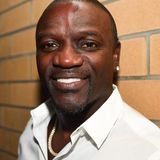
Locked Up gives a compact case for Akon’s ability to keep a sung narrative hook in the foreground. Consider how the track leaves his phrasing clear against a repeating beat.
I Wanna Be Free supplies a full project on which to compare the reach of Wally B. Seck’s voice through different pop and dance arrangements.
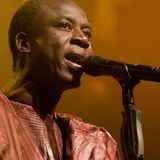
Orientissime gives Seck’s voice room to keep a long line in view over an ensemble with several kinds of rhythmic colour.

Diamono Groove gives Omar Pène and Super Diamono a shared recording for assessing the changing emphasis between lead voice, rhythm and band.
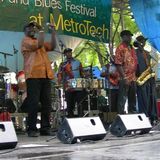
Orchestra Baobab’s Pirate’s Choice and later reunion albums show how Afro-Cuban rhythm, Wolof repertoire, guitar and saxophone became one band language. Follow the arrangement rather than isolating a single soloist.

Coumba Gawlo’s version of Pata Pata gives voters a specific way to compare her vocal presence and choice of arrangement with an already established song.
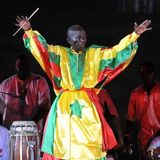
On Djabote, listen for how differently tuned drums can build a complex exchange in which the pulse stays clear. The group scale makes his work as an ensemble leader audible.
No entries from this region on this list yet.
About this ranking
Put a Doudou N’Diaye Rose recording next to an Orchestra Baobab performance. The percussion in Djabote is a subject in its own right. Baobab can let a guitar or saxophone make the first impression, while the rhythm continues to set up the response.
A singer has several ways to move within those choices. Tajabone gives Ismaël Lô space for an unhurried account. Cheikh Lô can keep his tone recognisable in Né la thiass even as the accompaniment moves between ideas. Baaba Maal’s records make it possible to hear what his lead brings to a small arrangement as well as to a large one.
The ballot crosses generations of dance and pop music. Thione Seck and Wally Seck give listeners two catalogues to compare without making one a proxy for the other. Choose a performance in which the artist’s decisions about pace, rhythm or melody still hold your attention after the chorus.
Think someone is missing from this list?
Suggest an entry and we'll review it for inclusion.