

CAF twice named Hassan player of the tournament, in 2006 and 2010. His midfield work gives Egypt’s title sequence a direct individual comparison.
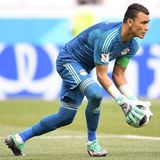
His four title-winning editions allow voters to judge what El-Hadary could repeat across Egypt sides in different games and shoot-outs.
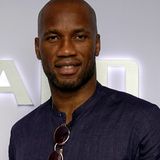
CAF records 11 AFCON goals for Drogba. Judge how he led the Côte d’Ivoire attack across editions and in the 2012 run to the final, apart from his Chelsea record.
The 2015 title gives Côte d’Ivoire’s captain a full tournament case. Watch how he carried the ball and controlled space as Ivorian captain.

The Ghana FA dates Abedi Pelé’s first AFCON finals to 1982. His case spans several editions, including Ghana’s 1992 run, when his ability to receive and carry the ball between lines made him influential before the final.
The scoring record puts Yekini’s work for Nigeria across tournaments in view, including his Golden Boot in the 1994 title campaign.

Hossam Hassan won with Egypt in 1986, 1998 and 2006. His place in several differently shaped title sides gives his finals case depth.

Milla’s AFCON record gives a distinct way to judge his movement and finishing inside Africa’s senior tournament.
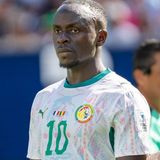
Mané’s winning penalty capped Senegal’s first title. Consider his play across the whole 2021 edition, in which CAF named him best player.

Egypt’s runner-up campaigns give Salah a stage to judge his attacking movement against organised regional defences rather than importing his club record.

Pokou won the scoring award in successive editions and struck 14 times across AFCON finals. His five-goal game shows what that peak could look like.
No entries from this region on this list yet.
About this ranking
Laurent Pokou’s goals across two editions give a scorer one way to build a tournament case. Essam El-Hadary’s work over a sequence of Egypt campaigns gives a goalkeeper another. Look for the point at which each player was asked to change the outcome of a match.
Egypt and Cameroon offer evidence of repeat performance, while Senegal’s first title shows what a decisive individual moment can mean to a team. A single final need not settle the vote. Follow players through a campaign and consider where their influence survived a change of opponent or role.
Eto’o’s 18 finals goals and Pokou’s 14 belong in a scoring comparison. Yekini’s case adds the contribution he made to the 1994 champions. Place the individual records beside the campaign or match in which they mattered. A goal tally can set a benchmark without settling who changed the tournament most consistently.
Ahmed Hassan and El-Hadary each won four editions with Egypt in different roles. In the 1992 Ghana case, read Abedi Pelé’s appearances across the wider tournament rather than treating a final as the whole record. Mané’s 2021 player award gives a more recent point of comparison. The tournament’s official edition name is retained even when its matches were played later.
Think someone is missing from this list?
Suggest an entry and we'll review it for inclusion.