
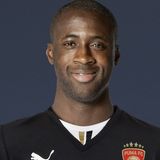
Touré combined central midfield duties at Barcelona with a more direct attacking role at Manchester City, where he scored 20 league goals in 2013–14. Compare how each team used his ability to move the ball through pressure.

Abedi Pelé played for Lille and Marseille. Look at the turn between the lines and the moment he releases a runner, two ways in which an attacking midfielder opens a defence.

Essien won the French league in both his years at Lyon and later covered more than one role at Chelsea. His ball-winning and ability to carry possession forward are the useful comparison points.

Aboutrika’s work close to the forwards for Al Ahly and Egypt offers a case rooted in African club and international matches. Look for his timing near the penalty area and the way he connects a midfield move to a chance.

Keita won three league titles in four Barcelona seasons. Notice when he stepped into the box, and when he stayed behind the ball to make a move safe.

Hassan won four Africa Cup of Nations titles and took the award for the best player at the 2006 and 2010 editions. His role across successive Egypt sides gives voters evidence of both peak and staying power.
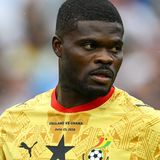
Partey’s spells with Atlético Madrid and Arsenal give two settings in which to assess how he receives with a player close behind him. Watch what his first touch opens up for the next pass.
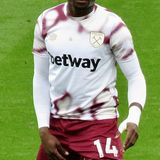
Kudus scored twice against Egypt at the 2023 Africa Cup of Nations. That match is a starting point for judging the transition from receiving between the lines to carrying the ball into shooting range.

Iwobi came through Arsenal’s system and moved to Everton after 149 first-team games in all competitions. Focus on his supporting work in midfield and the way he takes the ball across pressure into space.
Arsenal credits Song with 14 assists in his final season at the club. His passing from deep gives voters a second part of his case alongside his work screening the defence.
Diarra anchored midfield in Real Madrid’s consecutive league title seasons. Consider where he stood when his team lost the ball and how often he made the next attacking move possible.
Sissoko’s work for Valencia gives the ballot an example of the hard-running midfielder who can cover ground behind his team-mates and disrupt breaks before they reach the back line.

Gueye contributed to Lille’s league and cup double in 2010–11. His ability to close down loose balls and make the clean first pass after a recovery is central to his midfield case.
Benarbia won the French league’s player of the season award at Bordeaux. Watch how quickly he spots the runner beyond him after receiving the ball in midfield.
No entries from this region on this list yet.
About this ranking
Start with what happens when the player receives the ball. Jay-Jay Okocha could invite pressure and turn away from it. Abedi Pelé carried the ball into areas where defenders had to choose whether to close him or follow a runner. Mohamed Aboutrika offers a different example of how a player can shape an attack close to the forwards.
Deeper players make their impact in a different part of the move. Michael Essien could break up an attack and advance with the ball. Seydou Keita could arrive late or cover the space a team-mate had left. Yaya Touré’s work for Barcelona and Manchester City is useful because it lets you see what happened when the demands on the same player changed.
Compare the evidence that best fits the role. Ahmed Hassan’s tournament record shows the value of a player who could return in successive campaigns and retain his influence. A holding midfielder’s performance might be better understood by counting the attacks that never develop, then watching what he does with the first pass after a recovery. The ballot has room for both kinds of influence.
Read the argument
Think someone is missing from this list?
Suggest an entry and we'll review it for inclusion.