

Abedi Pelé spent 1988 to 1990 at Lille between spells with Marseille. His turn and acceleration made him dangerous between the lines, where he could carry the ball into space or release a runner.

Drogba was voted the French top flight’s player of the season for his 2003–04 campaign with Marseille. Watch how he could receive under pressure and lead the attack, a different challenge from finishing chances in the box.

Essien developed at Bastia, then won the league in both his seasons at Lyon. Voted player of the season in 2004–05, he gave Lyon a midfielder who could win the ball and carry it forward in the same move.

Hakimi joined Paris Saint-Germain in 2021 and helped win the 2024–25 league title. His runs beyond the winger and ability to recover ground make him a useful test of how much value a full-back can add at both ends.

Five seasons at Lens, from 2002 to 2007, form the core of Keita’s French top-flight case. His midfield work can be judged through his ability to cover ground, support possession and arrive late into attacking areas.

Adebayor broke through at Metz and joined Monaco in 2003. His height offered an outlet up front, while his movement gave defenders a different problem when Monaco played into the channels.

Aubameyang scored 37 league goals for Saint-Étienne between 2011 and 2013 and later led the attack at Marseille. The two spells offer a look at his timing in behind and how his finishing held up at different stages of his career.

Gervinho spent two seasons at Lille and helped win the league and cup double in 2010–11. His dribbling and runs from wide give voters a way to judge how much of Lille’s attacking threat he created himself.

Kalou scored 30 French top-flight goals for Lille after joining in 2012. His movement across the front line and knack for finding space in the box give that two-season spell a case of its own.

Osimhen scored 13 league goals in his sole Lille season, 2019–20. His pace behind defences and willingness to contest difficult balls made an immediate impact, with one French season on which to judge it.
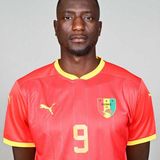
Guirassy moved from Amiens to Rennes in 2020 and scored 10 league goals in his first Rennes campaign. His work occupying centre-backs and receiving with his back to goal helps explain his value beyond those finishes.

Idrissa Gueye contributed to Lille’s 2010–11 league and cup double as he broke into the side. Recovering possession and closing space quickly were especially valuable in a team with so much attacking talent.
Keita won three league titles in five seasons at Saint-Étienne and scored 42 league goals in 1970–71. That campaign sets a high bar for peak performance, while the title seasons show how long he sustained his influence.
Akesbi scored 173 French top-flight goals between 1955 and 1964. His work at Nîmes and Reims gives him one of the strongest cases for sustained scoring across different clubs.
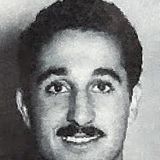
Mekhloufi won four French league titles with Saint-Étienne across two spells. He could work his way through a defence and finish moves himself, which gives his case a different shape from that of an outright centre-forward.
Niang scored 100 French top-flight goals and captained Marseille to the 2009–10 title. His 18 goals made him that season’s leading scorer, the high point of a league career that had also taken off at Strasbourg.
Dahleb was an early Paris Saint-Germain attacking figure at the Parc des Princes. The league includes him among foreign players with at least 100 goals in France’s top division, giving his case both club context and a career measure.
Benarbia started regularly in Monaco’s 1996–97 title side and won the league’s player of the season award with Bordeaux in 1998–99. Watch how quickly he could bring runners into an attack after receiving the ball in midfield.
Nonda followed his Rennes spell with a move to Monaco, where he led the 2002–03 scoring table with 26 league goals. His record offers a test of what a sustained peak looks like across a full season.
Sow led the French scoring table with 25 league goals in Lille’s 2010–11 title season. His timing in the penalty area offers a direct comparison with team-mate Gervinho’s runs from wide.
Bell defended Saint-Étienne’s goal for three seasons between 1991 and 1994 and had earlier played for Marseille and Bordeaux. Compare his handling, command and decisions under pressure with the contributions of outfield players.

Milla’s French career included spells at Monaco, Bastia, Saint-Étienne and Montpellier. His top-flight work for those clubs provides a broader basis for a vote than any single international performance.
No entries from this region on this list yet.
About this ranking
Saint-Étienne alone gives voters two different cases. Rachid Mekhloufi won four championships across two spells, while Salif Keita scored 42 league goals in a single season and won three titles with the club. Hassan Akesbi offers a third way to think about greatness. He scored 173 times in the French top flight, building his case over years at clubs including Nîmes and Reims.
Peak seasons make for a different argument. Didier Drogba was voted player of the season at Marseille in 2003–04. Six years later Mamadou Niang captained Marseille to the title and led the league in goals. At Lille, Gervinho could open up a defence from wide while Moussa Sow made the most of the space in the box. Lille also gives voters a shorter case in Victor Osimhen, whose 13 league goals came in a single season.
The midfielders and defenders ask different questions. Michael Essien helped Lyon win the title in both his seasons there. Ali Benarbia influenced attacking moves from midfield, first in a title side at Monaco and later as the league’s player of the season with Bordeaux. At Paris Saint-Germain, Achraf Hakimi’s runs from full-back show how much a defender can contribute to an attack. Joseph-Antoine Bell’s case rests on the decisions a goalkeeper makes repeatedly when the opposition gets through.
Give each player credit for the job they did in France’s top division. A sustained run of good seasons, an exceptional title campaign and an immediate impact at a new club can all make a convincing case. Compare the players in their own positions and eras, then decide which contribution you value most.
Think someone is missing from this list?
Suggest an entry and we'll review it for inclusion.