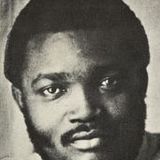
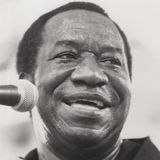
Hear how Tabu Ley gives his lead a lilt that stays audible above the switching instrumental patterns in his recorded catalogue.
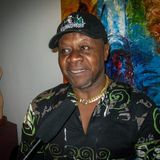
Emotion lets Wemba carry the character of his voice into arrangements beyond his older band records. Follow what happens when he lifts the end of a phrase.
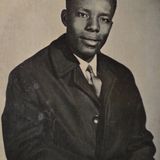
On Exhibition Dechaud with Orchestre African Fiesta, trace the way Dr Nico’s guitar moves from answering the ensemble to drawing it forward.
Try Gérant from Pépé Kallé’s catalogue to hear how much weight he brings to a phrase before the other voices enter.

On Nakei Nairobi, the strength of Mbilia Bel’s lead lies partly in the pauses that allow the guitars to finish a thought.
Galo Negro puts Mangwana and Papa Noël in one credited performance. Follow how comfortably his voice takes a turn around the guitar line.

Kibuisa Mpimpa gives listeners a place to compare Werrason’s lead in a sustained vocal passage with the energy he carries into the faster section.
Feux de l’amour shows the amount of room JB Mpiana can give a melody before the band starts to press forward.
On Sans commentaire, Madilu has a way of making a sustained note sound conversational. Listen to the way he uses the time the band gives him.
Dynastie offers an album-length view of Ferré Gola’s way of delaying a vocal resolution and letting the band build around him.
Maya is a starting point for Lutumba’s measured approach to songwriting. Hear how the repeated lines leave room for the accompaniment to develop.
On Galo Negro with Sam Mangwana, hear how a guitar phrase can become a second lead without interrupting the vocal.
Lema’s piano gives listeners a way to follow Congolese rhythmic ideas through jazz collaborations and other ensemble formats.
The pacing on Kwassa Kwassa lets Kanda Bongo Man shorten a vocal phrase and leave the guitars to keep dancers moving.

On Yo Pe, Innoss’B uses the return of a short phrase to change the feel of a beat that is already moving at speed.
Manuela puts Bopol’s repeated guitar and vocal ideas into a single performance. Listen for what carries through the change of emphasis.

Formule 7 gives Fally Ipupa room across an album to judge how patient melody can hold attention before a band opens out.

On Loi, Koffi’s lower vocal register sets the brightness of the responses in relief. Hear how that contrast carries the dance section.
Coupé Bibamba places Awilo’s calls against an arrangement built for movement. Listen for the points where he changes the rhythm by ending a phrase early.
Laissez-passer lets Diblo’s fast guitar remain clear above a busy backing. Compare the repeating figures with the runs that break out of them.
On Immortal Franco with Ensemble Rumba Kongo, Mbenza makes room for a different player’s repertoire while keeping the lead guitar his own.
Mégamix, Vol. 1 with Soukous Stars gives a continuous setting for listening to how Lokassa’s rhythm guitar holds an arrangement together.
On Tobina with Soukous Stars, follow the lines Dally’s guitar carries against the movement of the full band.
On Pamba-Pamba, Rigo Star shares credit with Mbilia Bel and Vivick Matoua. Listen for the movement of the guitar as the voices exchange places.
Carrière d’honneur – Retirada gives Héritier Wata a long enough canvas to hear how his voice moves between sustained phrases and a more insistent beat.
On Gentleman 2.0 Dadju works in a French-language pop and R&B setting. Listen to the portability of his melodic style as the backing changes from track to track.
Doublé doublé with Les Kamalé Dynamiques gives Nyboma an ensemble setting for alternating a weightless lead with a more insistent chorus.
No entries from this region on this list yet.
About this ranking
In Franco’s Mario, a story unfolds over a band that is already making a case of its own. An ear drawn to the lead on first hearing can return for the guitar parts and discover how much of the momentum is shared. Exhibition Dechaud offers another way in: follow Dr Nico’s playing even when it steps back from the foreground.
The relationship between singers and instrumentalists did not stand still. Diblo Dibala’s Laissez-passer gives the guitar an unusually fast-moving part to play. On Formule 7, Fally Ipupa has the length of an album to move between a sustained melody and passages carried by the band. These are different answers to the problem of keeping a long performance alive.
The Congolese catalogue runs well beyond either rumba or soukous. Ray Lema brings another set of textures to the ballot through his piano work, while Yo Pe and Gentleman 2.0 let listeners hear what contemporary dance and French-language pop have made possible for different voices. Pick the musician whose decisions remain audible when the collaborators, playing styles or period change.
Read the argument
Think someone is missing from this list?
Suggest an entry and we'll review it for inclusion.