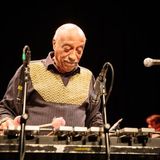
In the Éthiopiques set devoted to his recordings, notice how Tilahun can hold a note long enough for the band to change the colour behind it.
Erè Mèla Mèla offers a way to hear the detail in Ahmed’s ornaments and the role of a backing band that answers rather than simply follows the lead.

Aweke’s timing stands out when the arrangements get denser. Listen to the way she carries the end of a line across the point at which the beat might suggest stopping.

On Tikur Sew, a slowly gathering arrangement gives the voice time to develop a narrative. Compare what happens when Teddy Afro finally takes the lead up in scale.
The self-titled Gigi gives her Ethiopian vocal phrasing an expansive studio setting. Hear how soon she finds a melodic centre when the instruments move around her.
Éthiopiques 9 collects Eshèté’s electric band recordings. Compare the rasp of the lead with the punctuating rhythm of the arrangement.

Maalan Jira is an entry to Hachalu Hundessa’s Oromo songwriting. The voice holds the repeated question in view even as its delivery grows more emphatic.
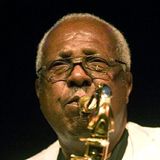
Compare the intensity of Mekurya’s saxophone-led recordings with his later collaboration with The Ex. Each setting makes different demands on the same forceful melodic attack.
No entries from this region on this list yet.
About this ranking
Begin with the way a band answers Mahmoud Ahmed on Erè Mèla Mèla. The voice keeps changing the emphasis inside the same stretch of music. In Mulatu Astatke’s instrumental work the lead changes again, but the arrangement itself can do some of the same work as a singer.
A catalogue introduced abroad through reissues encompasses several ways of singing. Alèmayèhu Eshèté can use an abrupt attack to cut through a band. Tilahun Gessesse can carry a longer line while the backing shifts underneath. Getatchew Mekurya’s saxophone makes its own case for how much a phrase can communicate before it has words.
Language is part of the difference between these candidates. The Oromo songwriting of Hachalu Hundessa and the Amharic pop of Teddy Afro belong in the same discussion without asking either artist to stand for the whole country. Take the time to compare a recording in which the voice has room with one in which the arrangement directs the pace.
Think someone is missing from this list?
Suggest an entry and we'll review it for inclusion.