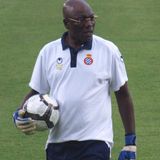
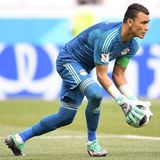
Essam El Hadary won four men’s AFCON titles with Egypt. That record rewards longevity, but his positioning and performance across several tournament generations remain the substance of the goalkeeping case.

Bruce Grobbelaar’s shoot-out performance helped Liverpool win the 1984 European Cup final. Set that defining night beside the consistency required across his long Liverpool career and his Zimbabwe record.
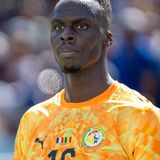
Édouard Mendy was named best goalkeeper as Senegal won the 2021 AFCON. His strongest case combines calm handling in that title run with the positioning and decisions behind his European club peak.
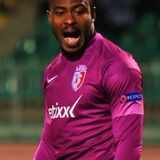
Vincent Enyeama was part of Nigeria’s 2013 AFCON-winning side and earned continental recognition during a career that also took him to Israel and France. Compare his reflexes and one-on-one work across eras.
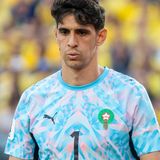
Yassine Bounou was player of the match in Sevilla’s 2023 Europa League final victory after a decisive shoot-out. The performance supplies a clear high-pressure test of his shot-stopping and composure.
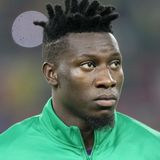
André Onana kept goal during Ajax’s run to the 2019 Champions League semi-finals. His case invites voters to weigh distribution and involvement in build-up play alongside conventional shot-stopping.
Peter Rufai captained Nigeria at its first men’s World Cup in 1994, when the Super Eagles won their group, after helping them win that year’s AFCON. It was a defining international season for the goalkeeper.
Joseph-Antoine Bell was named best goalkeeper at the 1988 AFCON as Cameroon won the title. His command and consistency deserve comparison with the other outstanding Cameroonian keepers of the period.
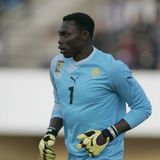
Carlos Kameni kept goal as Cameroon won Olympic gold in 2000. FIFA’s account records how his saves kept the side in the final before the shoot-out, providing evidence from a major pressure match.

Itumeleng Khune started in goal for South Africa at the 2010 World Cup on home soil. His long Kaizer Chiefs career gives voters club continuity to place beside that highly scrutinised tournament.
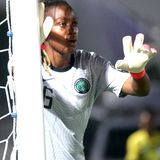
Chiamaka Nnadozie was named best goalkeeper at the 2024 WAFCON. Assess the decisions she makes before a shot arrives, including control of the area, alongside the saves themselves.

Badou Zaki won the African player award in 1986, an exceptional achievement for a goalkeeper. The honour anchors a case that should still be judged through his handling, authority and match influence.
Ronwen Williams won the 2024 CAF men’s goalkeeper award after taking the best-goalkeeper prize at AFCON, where his penalty saves helped South Africa finish third. His case includes a measurable tournament peak.
Khadija Er-Rmichi was named goalkeeper of the tournament as AS FAR won the 2025 CAF Women’s Champions League. The award adds a documented continental peak to a long club and international career.
Andile Dlamini was named best goalkeeper as South Africa won the 2022 WAFCON. Her clean sheets and control of the area during a title campaign provide the clearest basis for comparison.
No entries from this region on this list yet.
About this ranking
African goalkeeping history is not one continuous technical tradition. The role changed from an era in which handling, courage in crowded areas and long kicking dominated the brief to a modern game that also asks the goalkeeper to defend space and begin attacks. A fair comparison therefore starts with performance in the demands of the player’s own period.
Thomas N’Kono and Badou Zaki achieved the rarest individual recognition: each won the African player award while playing in goal, with N’Kono doing so twice. Joseph-Antoine Bell’s best-goalkeeper award at the 1988 AFCON strengthens Cameroon’s extraordinary claim to this position, while Carlos Kameni later supplied a decisive Olympic final performance. Essam El Hadary’s four AFCON titles represent exceptional longevity at the centre of a dominant Egypt side.
Club football supplies different tests. Bruce Grobbelaar’s 1984 European Cup final, Yassine Bounou’s 2023 Europa League final and André Onana’s role in Ajax’s 2019 Champions League run show contrasting approaches to pressure, distribution and risk. Édouard Mendy, Vincent Enyeama, Peter Rufai and Itumeleng Khune add long international careers in which leadership and repeatable decision-making matter more than a single famous save.
The list also treats women’s goalkeeping as part of the same African history. Chiamaka Nnadozie, Khadija Er-Rmichi and Andile Dlamini have each earned documented continental goalkeeper honours, while Ronwen Williams produced one of the outstanding modern men’s tournament campaigns. Vote for the goalkeeper whose work most changed matches—not simply the player with the largest medal collection.
Think someone is missing from this list?
Suggest an entry and we'll review it for inclusion.